When Someone with Dementia Refuses Personal Care
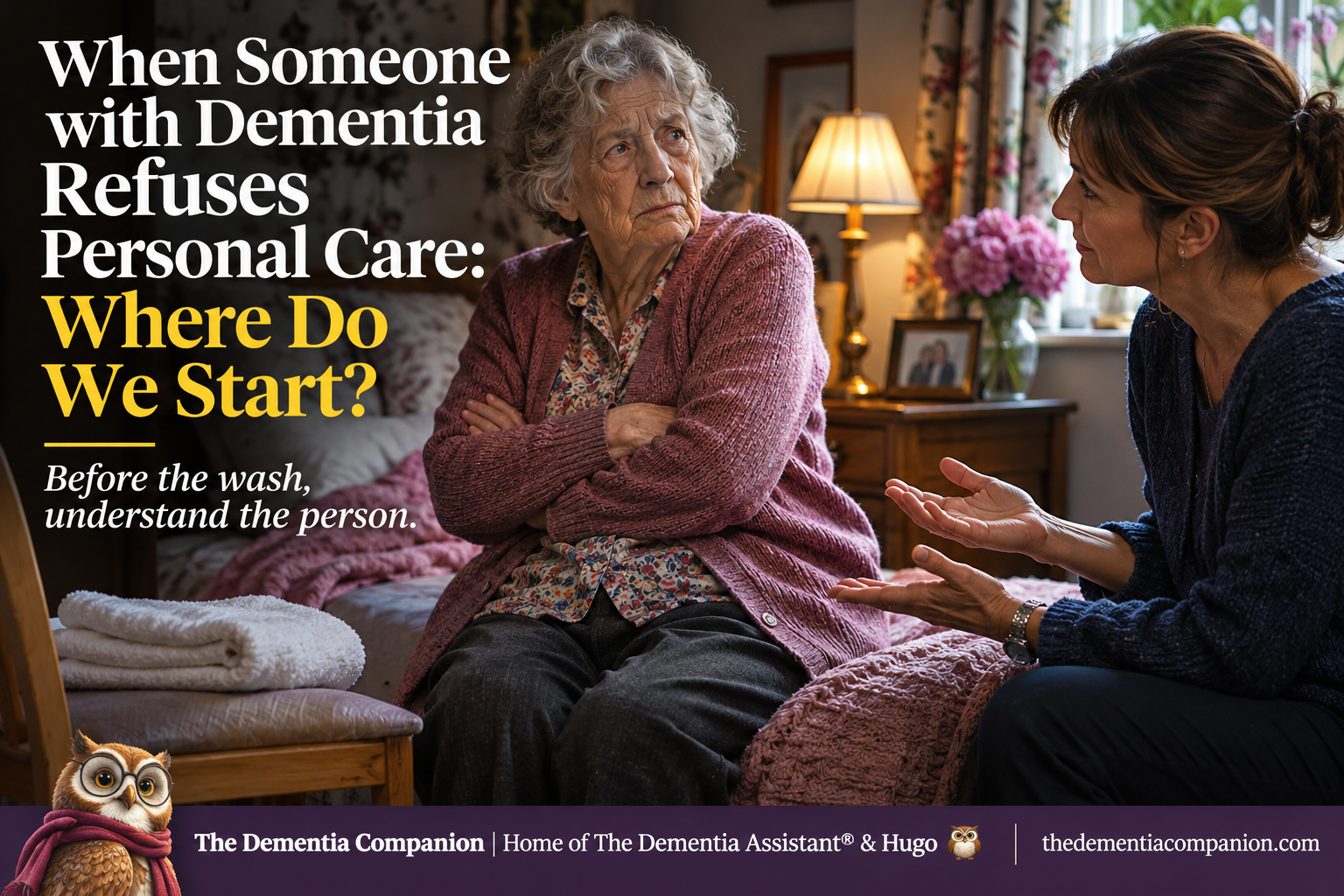
When Someone with Dementia Refuses Personal Care: Where Do We Start?
Before the wash, understand the person.
By Louise Donaghy, Founder of The Dementia Assistant® and The Dementia Companion®, Creator of Hugo Intelligence™
There you are, standing in the bathroom with a lovely warm flannel, a clean towel and the very best of intentions.
You’ve checked the water temperature, found their favourite soap and even warmed the room.
Everything is ready.
Except the person you’re hoping to help has absolutely no intention of cooperating.
“No! I don’t need a wash!”
And just like that, what should have been a simple part of the morning has turned into something resembling a diplomatic negotiation, except nobody has brought biscuits.
Perhaps you’re helping your mum, dad, husband, wife or someone you support professionally. Perhaps you’ve already tried three times this morning. Perhaps you’re worried about their hygiene, their comfort or whether they’ll develop sore skin.
You might even be wondering whether you’re doing something wrong.
When someone with dementia refuses personal care, the best place to start is not with the soap, the shower or the clean clothes. It’s with understanding what that experience might feel like for them.
Because what looks like refusal from our side may feel like fear, embarrassment, confusion, discomfort or a desperate attempt to hold on to control from theirs.
And that changes how we approach the whole situation.
Why Might Someone with Dementia Refuse Personal Care?
Imagine waking up one morning and somebody tells you it’s time to take your clothes off.
You don’t particularly want to.
Perhaps you don’t recognise the person asking. Maybe you have no idea why they are standing in your bathroom, holding a flannel and looking rather determined.
You might feel embarrassed, suspicious or frightened.
And then they tell you that you must have a wash.
Would you feel reassured?
Probably not.
Dementia can affect memory, recognition, communication, perception, processing and the ability to carry out familiar activities. But the person still has feelings, preferences, habits and a right to be treated with dignity.
There are many possible reasons why someone may resist washing, dressing, changing continence products or accepting help with the toilet.
They may not believe they need help.
Perhaps they have already washed and forgotten, or genuinely believe they are perfectly clean.
They may feel exposed or embarrassed.
Someone who has spent 80 years looking after their own personal care may find it deeply uncomfortable to have another person assist them, particularly with intimate areas.
They may be frightened or confused.
The shower could seem noisy or threatening. Water running over their face may be unpleasant. A mirror, unfamiliar bathroom or sudden movement could add to their uncertainty.
They may be uncomfortable or in pain.
Arthritis, painful joints, skin irritation, constipation, an infection or difficulties with movement can make washing and dressing distressing.
The timing might be wrong.
Perhaps they’re tired, hungry, cold or simply not in the mood. And, let’s face it, most of us have mornings when the idea of getting dressed feels terribly overrated.
The person helping may not be the person they feel comfortable with.
They might prefer a familiar family member, a professional carer, or someone of a particular gender. Their culture, faith, personal history and previous experiences may also influence how they feel about intimate care.
None of these possibilities should be assumed to explain an individual’s response.
But they give us somewhere kinder and more useful to begin.
Before We Ask Them to Wash, Can We Ask Ourselves a Few Questions?
When personal care becomes difficult, I think one of the most important things we can do is become curious.
Not curious in the sense of conducting an interrogation over the washbasin.
More like a gentle detective.
What was happening just before the person became upset?
Was the bathroom cold?
Was the water running loudly?
Did someone start removing their clothing before explaining what was happening?
Were they comfortable with the person helping?
Could they hear and understand the explanation?
Were they in pain, tired or struggling to follow several instructions?
Sometimes the difficulty is not the personal care itself. It is how, when, where or by whom the care is being offered.
A different approach may make a meaningful difference.
This is consistent with NICE dementia guidance, which recommends exploring possible clinical and environmental causes of distress, including pain, discomfort and inappropriate care approaches.
Instead of asking only, “How do I get them washed?”, try asking:
“What could I change so this feels safer, more familiar and more comfortable for them?”
That is a very different starting point.
What Can I Say When Someone Refuses a Wash?
Words matter, but so do our tone, facial expressions, body language and timing.
If someone is already anxious, a long explanation about hygiene is unlikely to help.
And repeating “You need a wash” six times probably won’t produce a magical seventh response.
Try slowing everything down.
Instead of:
“You haven’t washed for days. You need to get cleaned up.”
You could try:
“Would you like to freshen up a little? I’ve got a lovely warm flannel here.”
Instead of:
“Come on, we haven’t got all day.”
Try:
“There’s no rush. We can take our time.”
Instead of:
“You need to change those clothes. They’re dirty.”
Try:
“I’ve put your lovely blue cardigan out. Would you like to wear that today?”
Instead of:
“Let me do it for you.”
Try:
“Would you like to do this bit yourself, or would a little help be useful?”
These are invitations, not tricks for getting around somebody’s wishes.
If the person says no, appears frightened or pulls away, their response matters.
We should listen to what they are telling us, including what they communicate without words.
Give Back a Little Control, One Small Choice at a Time
Personal care is deeply personal.
For many people living with dementia, being told when to wash, what to wear and how to dress can feel like losing control over the most private parts of their day.
Small, genuine choices can help.
You might offer:
- A wash at the sink rather than a shower.
- A warm flannel instead of running water.
- Washing their face and hands themselves.
- Choosing between two familiar outfits.
- A preferred time of day.
- Help from someone they know and trust.
- Privacy while they manage as much as possible independently.
Try not to overwhelm someone with too many options at once.
“Would you like a bath, shower, strip wash, hair wash or to get dressed before breakfast?” might be a little ambitious before they’ve even had their first cup of tea.
One simple choice is often easier.
“Would you like the blue jumper or the green one?”
And remember that being able to do something independently, even if it takes longer, can be important to someone’s confidence.
The aim isn’t to take over.
It’s to support what the person can still do.
Privacy, Dignity and the Person Behind the Diagnosis
I cannot emphasise this enough.
Dementia does not remove somebody’s need for privacy or their right to be treated with respect.
Think about who the person was before they needed help.
Were they always very private?
Did they prefer a bath to a shower?
Did they like their hair washed at the hairdresser’s?
Did they have a particular morning routine?
Were there religious, cultural or personal preferences around modesty and who could assist with intimate care?
Perhaps Dad, who was always wonderfully independent, finds the thought of his daughter helping him in the bathroom unbearable.
Or Mum, who would happily chat for hours over a cup of tea, becomes deeply uncomfortable when somebody starts unbuttoning her blouse.
These reactions deserve understanding, not criticism.
Try keeping the bathroom warm, closing doors and curtains, explaining before touching, and covering areas of the body that are not being washed.
Where appropriate, consider whether another trusted person or a professional carer might be better placed to help.
Sometimes the most person-centred thing we can do is recognise that we are not the person they want helping with that particular task.
And that is all right.
What If They Refuse to Change Their Clothes?
Ah, the favourite cardigan.
The one that has been worn for four consecutive days and has apparently become a permanent member of the family.
You know it needs washing.
They know they love it.
Neither of you intends to surrender.
Clothing can provide familiarity, comfort and a sense of identity. Someone may not notice that an item is soiled, may find changing confusing or may feel strongly attached to the clothes they are wearing.
Rather than turning it into a confrontation, explore what matters.
Is the cardigan warm?
Is it particularly comfortable?
Does it remind them of someone?
Would a similar clean cardigan feel acceptable?
Could they manage a change later in the day?
Perhaps you could say:
“That cardigan is lovely and cosy. Shall we find something just as comfortable while it’s being washed?”
But if they decline, don’t turn a suggestion into a struggle.
If clothing is heavily soiled, causing discomfort or creating a skin-health risk, seek advice about a safe, respectful approach rather than leaving a serious hygiene concern unresolved.
When Someone Refuses Help with the Toilet or Continence Care
This can be one of the most sensitive and challenging parts of supporting someone living with dementia.
Being helped with the toilet or having a continence product changed may feel intrusive or humiliating, particularly if the person does not understand why assistance is needed.
They might be embarrassed, worried about falling, unable to communicate discomfort or confused about what is being asked.
Protect privacy wherever possible.
Explain each step simply.
“Would you like me to stand outside while you get yourself comfortable?”
“I can help with your clothing if you’d like me to.”
“Shall we make sure you’re warm and comfortable?”
Allow extra time, offer appropriate aids and consider whether an occupational therapist or continence nurse could suggest ways to make the process easier.
If someone is repeatedly left in wet or soiled clothing, there can be genuine concerns about discomfort, skin damage and infection.
These concerns need prompt, appropriate support, but they do not justify automatically overriding the person’s objections.
Ask healthcare professionals for an individualised plan that balances health needs, consent, safety and dignity.
When Should We Stop and Try Again Later?
Sometimes the wisest thing we can do is put the flannel down.
Not because we’ve failed.
Because the person is telling us that something is wrong.
If someone becomes frightened, tearful, angry, physically resistant or increasingly distressed, pause the care unless there is an immediate safety concern requiring urgent professional help.
Give them space.
Offer reassurance.
Move away from the situation if it is safe to do so.
Perhaps sit together, have a cup of tea, listen to familiar music or talk about something they enjoy.
You may discover that a wash offered later, by someone else or in a different way, is better received.
The important distinction is between postponing something safely and ignoring an essential care need.
A full shower might be able to wait.
Significant soiling, painful skin, suspected infection or another immediate health concern may need a more urgent plan.
That is when professional advice becomes particularly important.
Does Dementia Mean Someone Cannot Refuse Care?
No.
And this is something families and professionals need to understand.
A dementia diagnosis does not automatically mean someone lacks the mental capacity to make decisions.
In England and Wales, the Mental Capacity Act 2005 begins with the presumption that an adult has capacity unless it is established otherwise.
Capacity relates to the particular decision at the particular time. A person should receive appropriate support to understand and make their own decision.
Someone may make a choice that other people consider unwise without that automatically meaning they lack capacity.
Where a person is unable to make a particular decision, the legal framework requires an appropriate best-interests decision-making process, taking account of their wishes, feelings, beliefs and values, and considering less restrictive options.
This is not permission to force personal care.
If someone persistently objects to essential care and there are concerns about their capacity, safety or health, seek advice from the appropriate health or social care professionals.
Mental capacity and consent legislation varies internationally, including between UK jurisdictions, so local requirements must be followed.
A person living with dementia is still a person with rights, preferences and a voice.
Their diagnosis does not take those away.
What If We’ve Tried Everything and Personal Care Is Still Difficult?
First, please don’t assume you are failing.
Some families spend weeks trying to find an approach that feels comfortable for everyone.
And sometimes the answer is not another communication technique.
It may be a need for pain relief, equipment, an environmental change, a different carer, specialist assessment or more practical support.
Consider speaking with the person’s GP, dementia nurse, occupational therapist, district nursing team or continence service, depending on the concern and what’s available locally.
Professional support is especially important when:
- The person shows signs of pain, skin damage or discomfort.
- There is repeated difficulty managing essential continence or hygiene care.
- Personal care is causing significant or persistent distress.
- Their ability to move, stand or transfer has changed.
- A previously comfortable care routine suddenly becomes difficult.
- The carer is exhausted, struggling physically or worried about keeping everyone safe.
A sudden change in confusion or behaviour requires prompt medical assessment. Sudden confusion can be caused by delirium or other acute illness and should not simply be put down to dementia.
If the person suddenly becomes confused, seek immediate medical help.
Remember, support is not simply about completing the task. It’s about finding a safe and respectful way of meeting the person’s needs.
What Should Go into a Person-Centred Personal Care Plan?
This is where knowing the individual can make an enormous difference.
A useful care plan should explain more than when someone needs help.
It should tell the story of how they prefer to be supported.
Record their usual routines, preferred products, bathing or washing preferences, clothing choices, cultural and religious needs, communication style, privacy preferences, mobility needs and any known sources of discomfort.
Include what seems to help, what tends to increase distress, and the steps staff or family members should take when care is declined.
For example:
Margaret prefers to wash at the bathroom sink after breakfast. She likes to choose her own clothes and wash her face and upper body independently. She prefers a female carer for intimate support. Explain each step before offering assistance, allow time for her response and pause if she becomes distressed. Record any persistent refusal of essential care and seek appropriate advice.
This is a fictional example, but it shows the difference between a task list and a person-centred plan.
“Assist Margaret with washing” tells us what needs doing.
Understanding Margaret’s preferences helps us work out how to offer that support without losing sight of who she is.
A good plan should change as the person’s needs and wishes change.
And What About the Carer Who Is Standing There Holding the Flannel?
We need to talk about you, too.
Because supporting someone through personal care difficulties can be exhausting.
You may begin each morning with patience, compassion and every intention of staying calm.
Then, by ten o’clock, you’ve asked about a wash three times, the clean clothes are still on the bed, breakfast has gone cold and you’re wondering whether it’s socially acceptable to crawl back under the duvet.
Some days, it probably feels quite tempting.
But a difficult morning does not define the relationship you have with the person you care for.
You are human.
You can feel frustrated, worried or upset while still caring deeply about their dignity and wellbeing.
You are also entitled to ask for help.
Whether that means sharing care responsibilities, arranging professional support or speaking to someone who understands dementia, your wellbeing matters.
A calmer, better-supported carer is often better placed to offer patient and thoughtful care.
And sometimes, a cup of tea and a reset really are the most sensible next steps.
One Final Thought: The Person Matters More Than the Task
If there’s one thing I’d like you to remember from this article, it’s this:
Personal care should never become a battle to be won.
A wash is important.
Clean clothes matter.
Comfort, skin health and hygiene matter too.
But so do trust, dignity, consent and the person’s sense of safety.
The goal is not simply to get somebody into the shower.
It’s to understand what they need, what they fear, what they prefer and what might help them feel comfortable enough to accept support.
Sometimes that means changing the time.
Sometimes it means changing the environment.
Sometimes it means allowing the person to do more themselves.
And sometimes it means accepting that today’s full wash may need to become a smaller, gentler alternative while a safe plan is made.
Because behind every refusal is a person.
Not a problem to be managed.
A person to be understood.
And that is where truly person-centred care begins.
Ask Hugo: You’re Not Expected to Have Every Answer
If you’re supporting someone living with dementia who is finding washing, dressing or personal care difficult, Hugo can help you think through what might be happening and explore more person-centred ways to respond.
You can explain your situation, consider the person’s individual routines and preferences, and explore practical ideas at your own pace.
Hugo Intelligence™ is part of The Dementia Assistant®, created and powered by Person-Centred Intelligence®.
Hugo offers educational guidance and support, not medical diagnosis or a replacement for professional assessment.
Explore more articles at:
https://thedementiacompanion.com/
Meet Hugo and explore The Dementia Assistant®:
https://thedementiaassistant.com/
All subscriptions include a 30-day complimentary trial.
With warmth and understanding,
Louise and Hugo ❤️🦉
The Dementia Companion®, home of The Dementia Assistant® and Hugo 🦉
https://thedementiacompanion.com/
⸻
References and further reading
1. NICE. Dementia: assessment, management and support for people living with dementia and their carers, NG97.
https://www.nice.org.uk/guidance/ng97/chapter/recommendations
2. Alzheimer’s Society. When a person with dementia doesn’t want to change their clothes or wash.
https://www.alzheimers.org.uk/get-support/living-with-dementia/dementia-washing-changing-refusal
3. Alzheimer’s Society. How to support a person with dementia to wash, bathe and shower.
https://www.alzheimers.org.uk/get-support/living-with-dementia/washing-bathing-showering-tips
4. NHS. Mental Capacity Act.
https://www.nhs.uk/social-care-and-support/making-decisions-for-someone-else/mental-capacity-act/
5. NHS. Sudden confusion (delirium).
https://www.nhs.uk/symptoms/confusion/
6. Dementia UK. Managing distress in a person living with dementia.
https://www.dementiauk.org/information-and-support/health-advice/coping-with-distress/
Educational information only. Individual health needs, consent and safeguarding concerns should be discussed with appropriate professionals.
FAQ questions To ask Hugo 🦉
Why do people with dementia refuse personal care?
A person living with dementia may decline personal care because they feel frightened, embarrassed, uncomfortable or confused. Pain, privacy, unfamiliar carers, temperature and timing may also affect their response. Understanding the individual is more useful than assuming they are being difficult.
What should I do if someone with dementia refuses to shower?
Avoid arguments or forcing care. Consider whether they would prefer a wash at the sink, a warm flannel, a different time or help from someone else. If the person becomes distressed, pause safely and reassess. Seek professional advice when essential hygiene needs remain unmet.
Can someone with dementia refuse personal care?
Yes. A dementia diagnosis does not automatically remove a person’s ability or right to make decisions. Capacity must be considered for the particular decision and time, following the relevant local laws. Persistently declined essential care may require professional assessment and an individualised plan.
How can I encourage someone with dementia to change their clothes?
Try offering a familiar clean outfit, providing small choices and allowing the person to dress independently as far as possible. Explore whether discomfort, embarrassment, attachment to favourite clothing or difficulties understanding the task are influencing their decision.
When should I seek help with dementia personal care refusal?
Contact an appropriate health or care professional when the person is repeatedly distressed, hygiene problems threaten their health, pain or skin damage is suspected, or essential care cannot be provided safely. Sudden confusion requires immediate medical attention.
You May Also Find Helpful
- Mum Won’t Let Us Brush Her Teeth. How Do We Support Oral Care With Dignity?
- How Do I Know When Mum with Dementia Needs a Care Home?
- Mum with Dementia Can’t Tell Me She’s in Pain. How Can I Recognise It?
- Mum with Dementia Is Awake All Night and Sleeping All Day. What Can I Do?
- Need help with this situation? Ask Hugo
Need help with your own situation? Ask Hugo.
One Person. One Continuing Care Story. The Dementia Companion is where you discover guidance. Inside The Dementia Assistant®, talk with Hugo, save and categorise conversations, record daily notes and involve authorised supporters in a continuing care plan centred around the person.
Ask Hugo About This · Start Your Continuing Care Plan — Families · Continuing Care Planning — Professionals
Personal guidance requires the appropriate account and subscription access. Care-plan information is used only with authorised access and the required consent and selection steps. All subscription plans include a 30-day complimentary trial.