Person-Centred Care
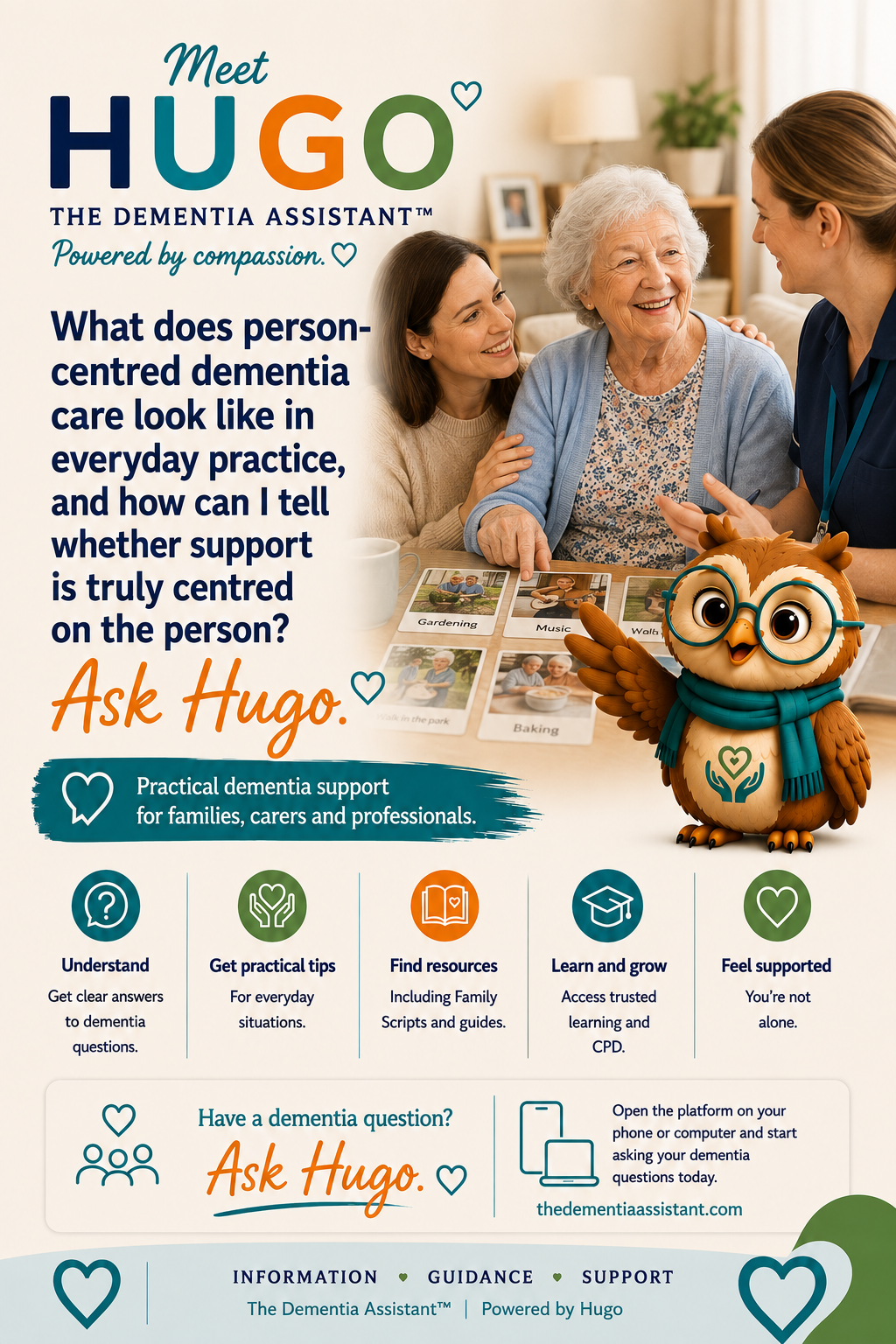
What does person-centred dementia care look like in everyday practice, and how can I tell whether support is truly centred on the person?
Person-centred care begins with the individual’s identity, preferences, relationships and rights, rather than treating everyone with dementia in the same way. Notice what the person enjoys, how they communicate and which parts of daily life they want to manage themselves. Offer understandable choices and allow time for a response. A routine that suits the service may not suit the person, so consider what can be adapted safely. Include family knowledge where appropriate, but keep listening to the person’s current wishes. When support is difficult, look for discomfort, fear or an unmet need rather than assuming deliberate resistance.
Example wording: “Would you like breakfast now, or would you prefer a little more time?”
Hugo, inside The Dementia Assistant, is who you talk to.
Educational guidance, not a diagnosis, not an emergency service.