Person-Centred Care
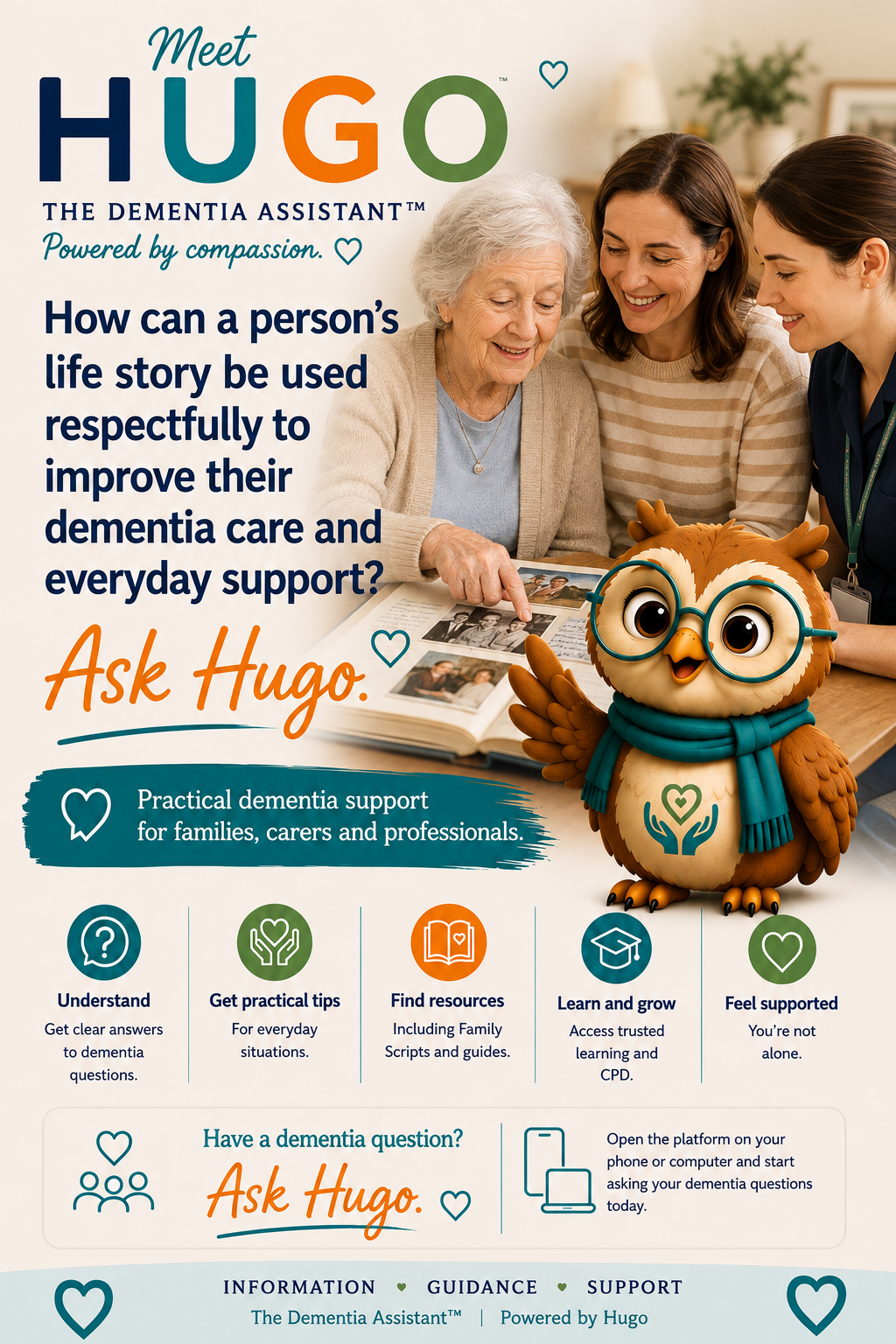
How can a person’s life story be used respectfully to improve their dementia care and everyday support?
A life story can help supporters understand the person beyond their diagnosis. Everyday details about relationships, work, music, routines and preferences may offer useful ways to connect. Invite the person to share what matters to them rather than checking dates or correcting memories. Ask permission before recording or sharing personal information, and respect subjects they prefer not to discuss. Family recollections can help but should not override the person’s present wishes. Some memories may be painful, so follow their response and stop if they become uncomfortable. Use what you learn to offer choices, not to define them permanently.
Example wording: “This song seems familiar. Would you like to listen, or choose something else?”
Hugo, inside The Dementia Assistant, is who you talk to.
Educational guidance, not a diagnosis, not an emergency service.