Learning Disabilities & Dementia
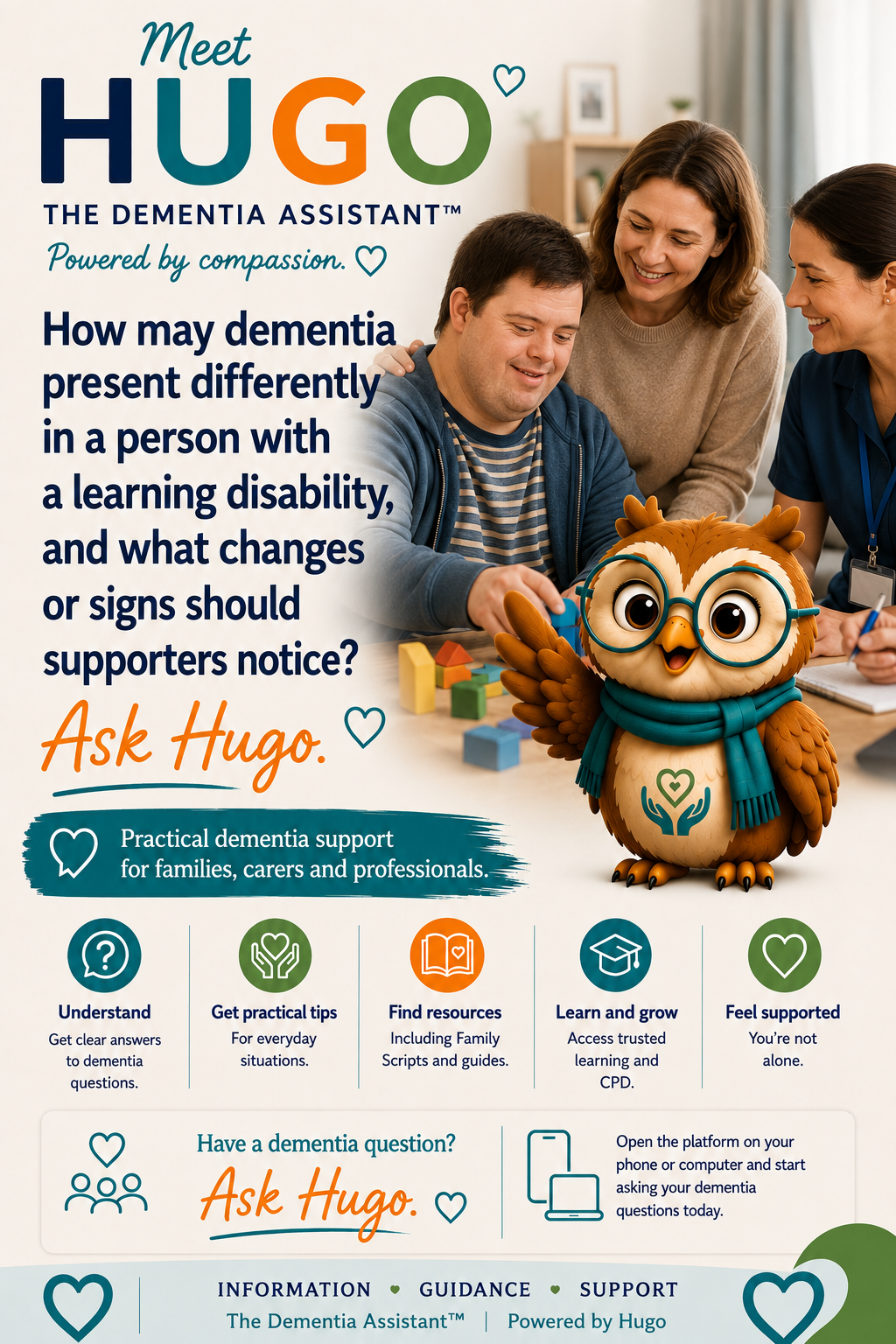
How may dementia present differently in a person with a learning disability, and what changes or signs should supporters notice?
For someone with a learning disability, it can be especially important to compare changes with their own usual abilities rather than with other people. Supporters may notice differences in familiar tasks, communication, mood, sleep or participation. Record concrete examples and when they began, while involving the person in an accessible way. These changes do not by themselves establish dementia: sensory difficulties, pain, illness and other causes may need assessment. Seek advice from professionals familiar with the person’s needs and ask for appropriate communication adjustments. A sudden change needs prompt medical attention, not a wait for a routine dementia review.
Example wording: “This task used to feel easier. Can you show me which part is difficult now?”
Hugo, inside The Dementia Assistant, is who you talk to.
Educational guidance, not a diagnosis, not an emergency service.