Behaviour & Distress
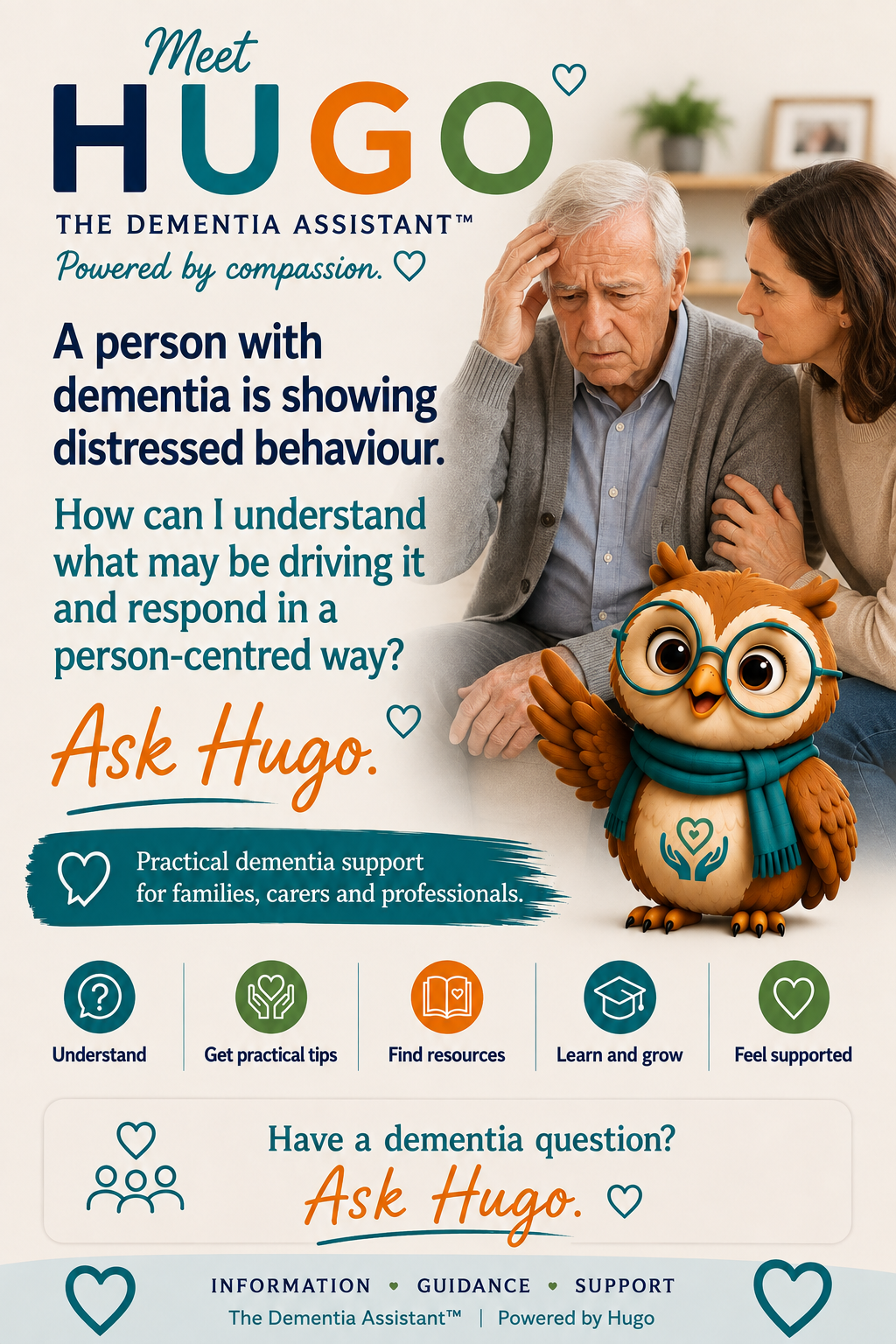
A person with dementia is showing distressed behaviour. How can I understand what may be driving it and respond in a person-centred way?
Distress may be a way of communicating when words are difficult to find. Pain, tiredness, hunger, noise or an unfamiliar situation can all make a moment harder. Rather than labelling the person as difficult, notice what happened just before the change and what usually helps them feel safe. Reduce demands, give them space and speak calmly. Offer one simple choice rather than several instructions. Do not force a conversation or touch if it increases their distress. A sudden or unusual change needs prompt medical assessment; immediate danger needs local emergency help.
Example wording: “This feels difficult. Shall we sit somewhere quieter?”
Hugo, inside The Dementia Assistant, is who you talk to.
Educational guidance, not a diagnosis, not an emergency service.