Why We Shouldn’t Wait Until Dementia: Preserving Our Elders’ Stories Before They Are Lost
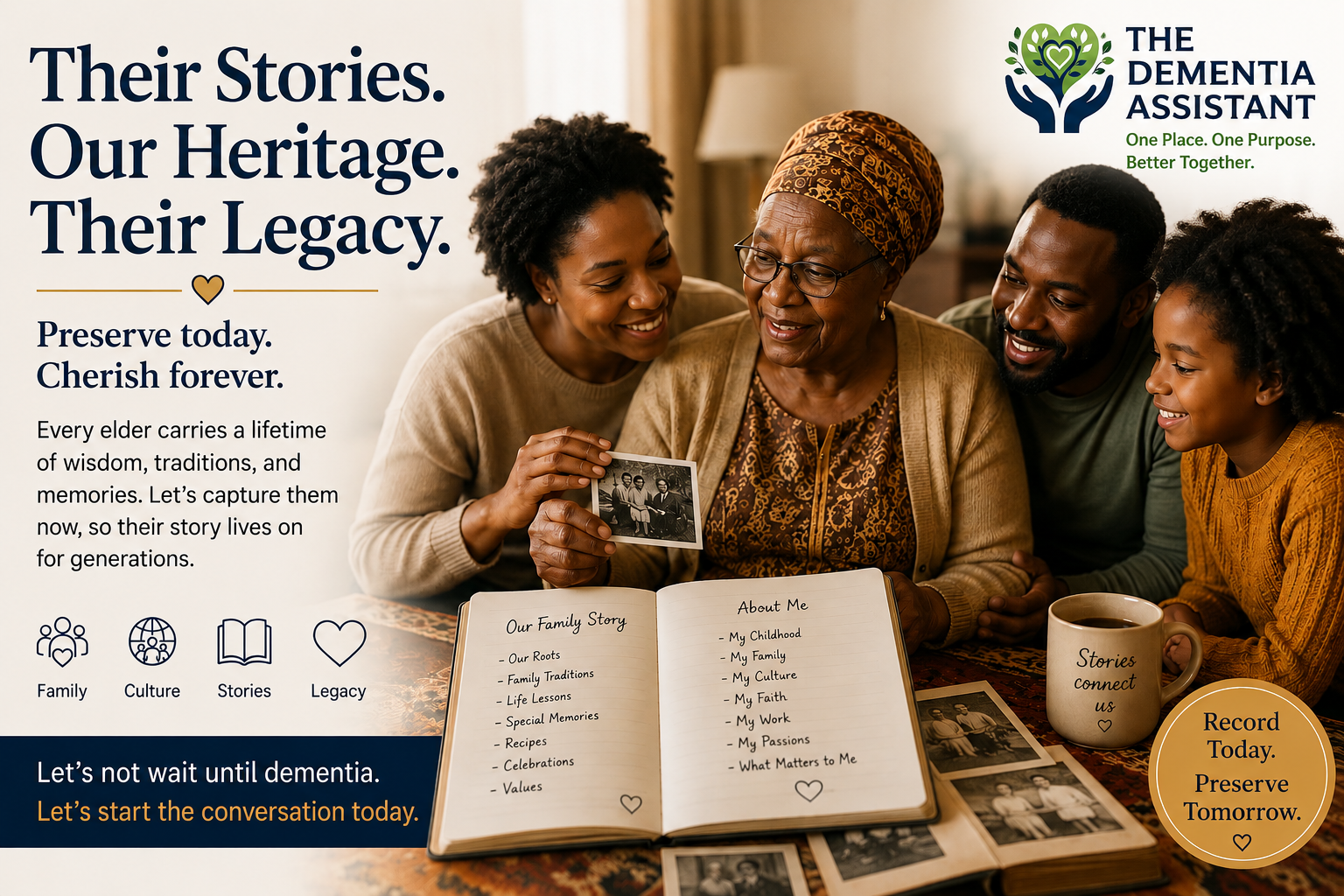
Why We Shouldn’t Wait Until Dementia: Preserving Our Elders’ Stories Before They Are Lost
There was a time when history lived in books.
Today, much of our history lives in our elders.
They carry the stories of our families, the traditions that shaped us, the recipes that never made it onto paper, the celebrations, the languages, the sayings, the lessons learned through hardship, and the wisdom gathered across decades of life.
Yet too often, we don’t realise how much knowledge they hold until it begins to disappear.
Many families first start asking questions when a loved one receives a dementia diagnosis.
Suddenly there is an urgency.
“What was Mum’s favourite childhood memory?”
“What was Grandad’s first job?”
“How did our family celebrate special occasions?”
“What traditions did we follow when I was young?”
“What happened during those years that nobody ever spoke about?”
Sometimes the answers are still there.
Sometimes they are not.
And that can leave families carrying a profound sense of loss.
The Hidden Grief That Few People Talk About
When dementia affects a loved one, families often grieve long before death occurs.
They grieve memories that can no longer be recalled.
They grieve conversations that can no longer be had.
They grieve stories that were never told.
For many cultures, this loss reaches far beyond the individual.
In communities around the world, elders are the keepers of family history, cultural traditions, language, faith, customs, and identity.
When dementia progresses before these stories have been shared, family members can find themselves unexpectedly carrying responsibilities they never anticipated.
A daughter may suddenly become the keeper of traditions she was never taught.
A son may inherit family leadership without understanding the stories behind it.
Grandchildren may grow up disconnected from parts of their heritage because the knowledge was never passed down.
The emotional impact can be significant.
Not only are families coping with the challenges of dementia itself, but they may also feel guilt, sadness, regret, and fear that important parts of their family’s identity may disappear forever.
The Day We Realised We Needed To Record More
One of the reasons we created the extensive “About Me” and Care Planning forms within The Dementia Assistant was originally to support person-centred care.
We wanted carers, professionals, and family members to understand the person behind the diagnosis.
Who were they?
What mattered to them?
What music did they love?
What foods brought them comfort?
What traditions were important to them?
What routines made them feel safe?
What life experiences shaped who they became?
When someone is living with dementia, these details become incredibly important because they help us provide care that respects the individual’s identity.
As dementia progresses, a person may revisit different stages of their life. They may talk about childhood, remember events from decades ago, or seek comfort in familiar traditions.
Having access to these personal stories helps families and carers continue to connect with the person they know and love.
But over time, I realised something else.
These forms weren’t only preserving information for care.
They were preserving family history.
They were preserving culture.
They were preserving legacy.
This Is Bigger Than Dementia
The more families I work with, the more I believe this lesson applies to everyone.
Not just families affected by dementia.
Not just older adults receiving care.
Everyone.
Because dementia is not the only thing that takes stories away.
Life does.
Time does.
Eventually, every family reaches the day when an elder is no longer sitting at the table telling stories.
When that day comes, families often find themselves wishing they had asked more questions.
Wishing they had recorded more memories.
Wishing they had written things down.
Wishing they had listened just a little longer.
The truth is that preserving someone’s life story should not begin after a diagnosis.
It should begin long before.
A New Family Tradition
Perhaps the lesson is not to wait.
Perhaps we should start creating a new tradition.
Spend time with your parents.
Spend time with your grandparents.
Spend time with the older people in your community.
Ask questions.
Record conversations.
Write down memories.
Document traditions.
Capture recipes.
Save photographs.
Learn family stories.
Discover where your family came from.
Find out what shaped the people who shaped you.
Because every conversation recorded today becomes a gift for future generations.
When The Time Comes
None of us can stop time.
None of us can prevent loss entirely.
But we can preserve what matters.
When the natural time eventually comes for an elder to leave us, their stories do not have to disappear with them.
Their voice can still be heard.
Their lessons can still be shared.
Their traditions can still be celebrated.
Their history can still guide future generations.
In that way, they never truly leave.
They remain in the stories we tell.
They remain in the traditions we continue.
They remain in the values we pass on.
They remain in our hearts, our minds, and our spirit.
And perhaps that is one of the greatest gifts we can give to those who come after us.
Let’s not wait until dementia.
Let’s start recording the stories today.
Louise Donaghy
Founder, The Dementia Companion & The Dementia Assistant
https://thedementiacompanion.com
https://thedementiaassistant.com