When Resentment Creeps Into Caregiving: The Emotion Nobody Wants to Talk About
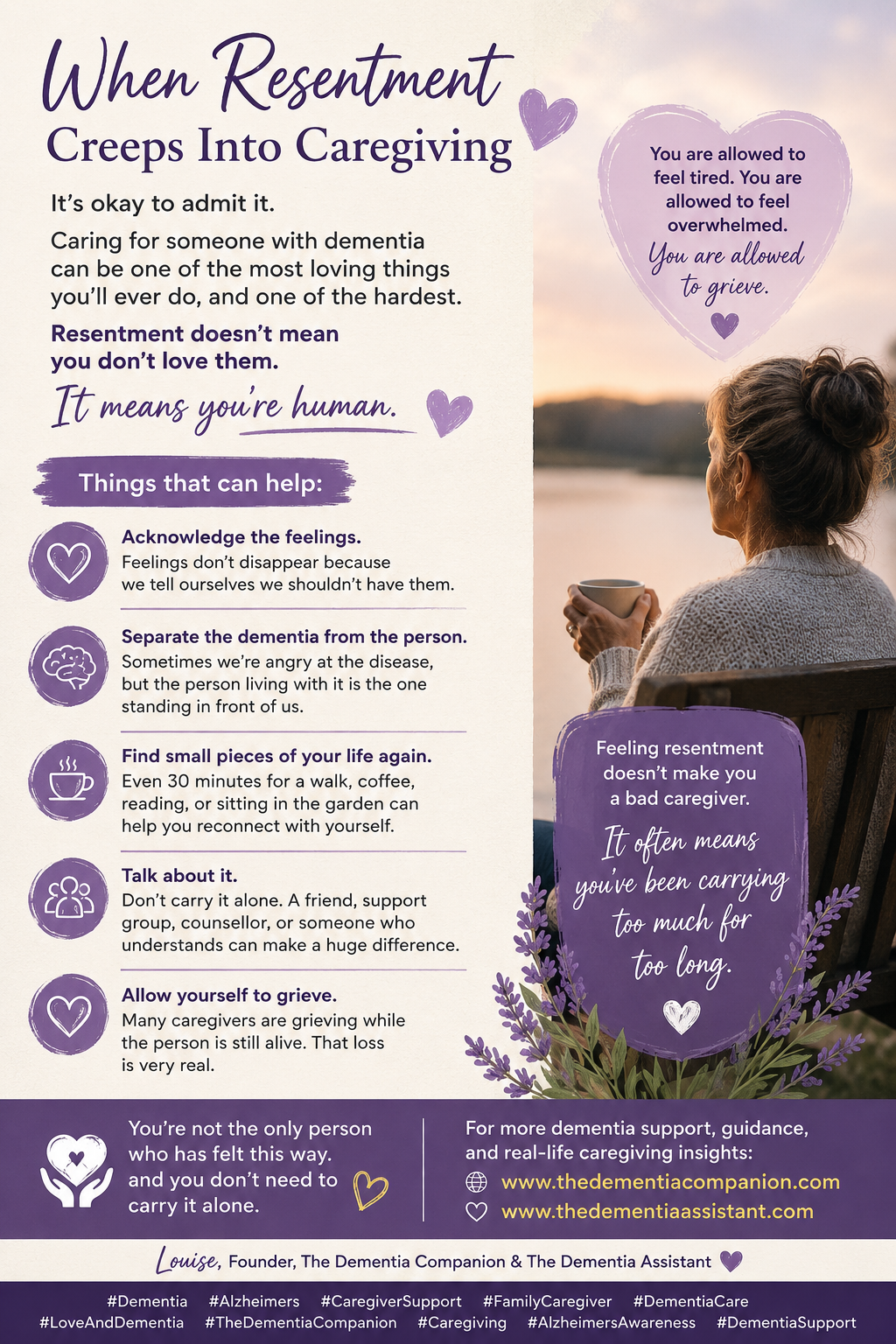
When Resentment Creeps Into Caregiving: The Emotion Nobody Wants to Talk About
If you’ve ever found yourself feeling resentful toward a loved one living with dementia, you’re not alone.
It’s one of the most common emotions caregivers experience, yet it’s also one of the least talked about. Many people feel ashamed admitting it. They worry it makes them a bad spouse, a bad son or daughter, or somehow less caring.
The truth is very different.
Resentment is often not a sign that you love your loved one less.
It’s a sign that you’ve been carrying more than any one person should carry alone.
The Hidden Reality of Caregiving
When dementia enters a family, life changes in ways most people never expect.
The relationship you once had may slowly disappear. Conversations become difficult. Plans change. Independence fades. Responsibilities increase. The future you imagined begins to look very different.
Many caregivers find themselves grieving while still caring for someone who is physically present.
You may miss:
* The conversations you used to have.
* The partnership you once shared.
* The freedom to make spontaneous plans.
* Time with friends and family.
* The version of life you thought you would have.
These losses are real.
Yet many caregivers don’t allow themselves to acknowledge them because they feel guilty.
“I Love Them, But I’m Angry”
A daughter once told me:
“I love my mum more than anything, but sometimes I feel angry every time the phone rings because I know there will be another problem to solve.”
A husband caring for his wife with Alzheimer’s disease confessed:
“I hate myself for saying this, but sometimes I just want one day where nobody needs me.”
Neither of these people were bad caregivers.
They were exhausted.
There is an important difference.
Resentment often develops when caregivers spend months or years putting their own needs last. Eventually the emotional tank runs empty.
What appears as anger is often burnout, grief, loneliness, fear, and exhaustion all mixed together.
Understanding Where Resentment Comes From
Resentment rarely appears overnight.
It usually grows from a combination of factors:
Chronic Exhaustion
Many caregivers are running on little sleep and constant stress. When every day feels like crisis management, patience naturally becomes harder to maintain.
Loss of Independence
Your schedule may no longer belong to you. Simple things like shopping, meeting friends, taking holidays, or even having a quiet cup of tea can become difficult.
Feeling Alone
Many caregivers feel isolated. Friends drift away. Family members may not fully understand what daily life looks like. The person you once confided in may now be the person you are caring for.
Grief
One of the most overlooked aspects of dementia caregiving is anticipatory grief.
You may be grieving the gradual loss of the person you knew long before they are physically gone.
What Helped One Family
I once worked with a gentleman caring for his wife who had advanced dementia.
He constantly described himself as impatient and resentful.
After talking together, we discovered he hadn’t had a single afternoon to himself in over two years.
Not one.
His wife attended a day centre once a week, and instead of resting, he used that time to catch up on shopping, paperwork, cleaning, and appointments.
When we arranged additional respite support, something remarkable happened.
His resentment began to ease.
Not because he loved his wife more.
But because he finally had space to breathe again.
Sometimes the solution isn’t becoming a better caregiver.
Sometimes it’s becoming a supported caregiver.
Practical Ways to Manage Resentment
Acknowledge It
Trying to suppress resentment often makes it stronger.
Instead of judging yourself, try recognising what the feeling might be telling you.
Are you tired?
Are you overwhelmed?
Do you need support?
Separate the Disease From the Person
Dementia changes behaviour.
The accusations, repetition, aggression, wandering, or refusal of care are symptoms of the disease.
Whenever possible, remind yourself that dementia is the problem—not the person living with it.
Accept Help
Many caregivers wait until they are at breaking point before accepting support.
Whether it’s family, friends, respite services, support groups, or professional carers, accepting help is not failure.
It’s sustainability.
Reclaim Small Parts of Yourself
You don’t need a two-week holiday to make a difference.
Sometimes thirty minutes can help.
A walk with the dog.
A coffee with a friend.
Gardening.
Reading.
Listening to music.
Small moments of normality can be incredibly powerful.
Talk About It
One of the most healing things caregivers can do is speak honestly with others who understand.
The moment you realise other people have felt exactly the same way can be incredibly freeing.
You Are Not a Bad Person
If resentment has found its way into your caregiving journey, it doesn’t mean you’ve stopped loving your loved one.
In fact, many of the most devoted caregivers I’ve ever met have experienced these feelings.
The difference is that they eventually learned something important:
They were not failing.
They were hurting.
And hurting people need support too.
So if you’re carrying resentment today, try offering yourself the same compassion you would offer someone else.
Because dementia doesn’t just affect the person diagnosed.
It affects the entire family.
And caregivers deserve care as well.
⸻
For more practical dementia support, real-life caregiving advice, and family resources, visit:
https://thedementiacompanion.com
https://thedementiaassistant.com
Louise, Founder, The Dementia Companion & The Dementia Assistant