When Love Meets Exhaustion: The Hidden Reality of Dementia Caregiving
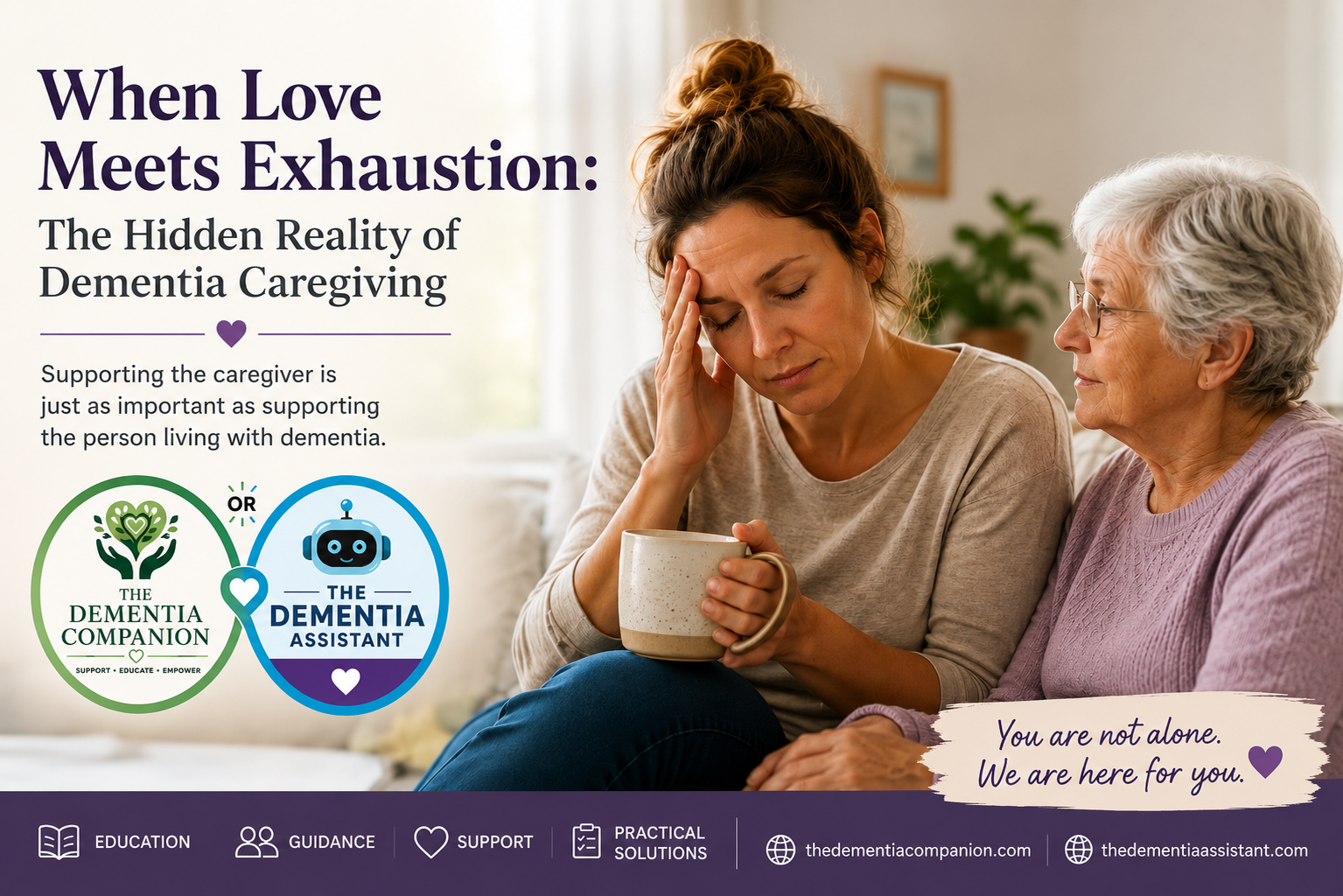
When Love Meets Exhaustion: The Hidden Reality of Dementia Caregiving
There is a question we hear every day in dementia support groups, clinics, care homes, and family living rooms:
“How do I keep going?”
Not because people don’t love the person they are caring for.
Quite the opposite.
Many family carers are giving everything they have.
They are managing medications, appointments, meals, finances, personal care, safety concerns, sleepless nights, repeated questions, emotional distress, and often their own health problems at the same time.
Yet one of the biggest challenges facing dementia care today isn’t dementia itself.
It’s caregiver burnout.
A Growing Issue Worldwide
Research consistently shows that family caregivers experience significantly higher levels of stress, anxiety, depression, sleep disruption, and physical health problems than the general population.
Many carers tell us:
“I feel guilty when I’m tired.”
“I feel selfish for wanting a break.”
“I love them, but I don’t know how much longer I can do this.”
These feelings are incredibly common.
They are also completely understandable.
Dementia is not simply memory loss.
It is a condition that can affect communication, behaviour, sleep, mobility, continence, emotions, and decision-making. As needs increase, so does the responsibility carried by those providing support.
The Problem With “Just Be Strong”
One of the most unhelpful messages caregivers receive is:
“You’re so strong.”
While often meant kindly, it can create pressure to keep pushing forward without asking for help.
Strength is important.
But sustainable caregiving is not about being endlessly strong.
It is about having the right support.
Evidence shows that caregivers who access education, respite, support groups, practical resources, and emotional support are better able to maintain their own wellbeing while continuing to provide high-quality care.
Our View at The Dementia Companion
At The Dementia Companion, we believe caregivers deserve support long before they reach crisis point.
Too often families only seek help when they are completely exhausted.
We believe support should be available at the very beginning of the journey.
Not just during emergencies.
Not just after burnout.
Not just when things become overwhelming.
Education helps families understand what is happening.
Practical tools help them respond with confidence.
Compassion helps them remember they are human too.
Small Changes That Can Make a Big Difference
If you are caring for someone living with dementia, consider asking yourself:
✅ Have I eaten properly today?
✅ Have I had a meaningful conversation with another adult this week?
✅ Am I sleeping enough?
✅ Have I accepted help when it was offered?
✅ Have I taken even 15 minutes for myself?
These may sound like small things.
But small acts of self-care often become the foundation that allows long-term caregiving to continue.
You Are Not Failing
If you are tired, frustrated, grieving, overwhelmed, or uncertain about the future, it does not mean you are failing.
It means you are carrying something incredibly difficult.
Behind every person living with dementia is often a caregiver quietly doing hundreds of things nobody else sees.
We see you.
And we believe you deserve support too.
⸻
Need Practical Dementia Support?
The Dementia Companion provides educational articles, family guidance, communication strategies, real-life solutions, and practical resources designed to help families, carers, and professionals navigate dementia with confidence and compassion.
Visit:
🌐 The Dementia Companion
🌐 The Dementia Assistant
Because supporting the caregiver is part of supporting the person living with dementia. 💜
Author: Louise Donaghy
Dementia Practitioner | Independent Care Professional | Founder, The Dementia Companion & The Dementia Assistant
Further Reading
We encourage families and caregivers to explore these evidence-based resources:
* Alzheimer's Society – Looking After Yourself as a Carer
* NHS – Caring for Someone with Dementia
* Carers UK – Support for Family Caregivers
* Alzheimer's Association – Caregiver Health and Wellbeing
* Skills for Care – Supporting Unpaid Carers
Direct links in The Dementia Assistant App in Resources
While education and support can make a significant difference, no caregiver should feel they have to manage alone. If you are struggling, reaching out for advice, respite, or emotional support is a sign of strength, not weakness.