When Dementia Makes Living Alone Unsafe: Real Stories and Practical Advice for Families
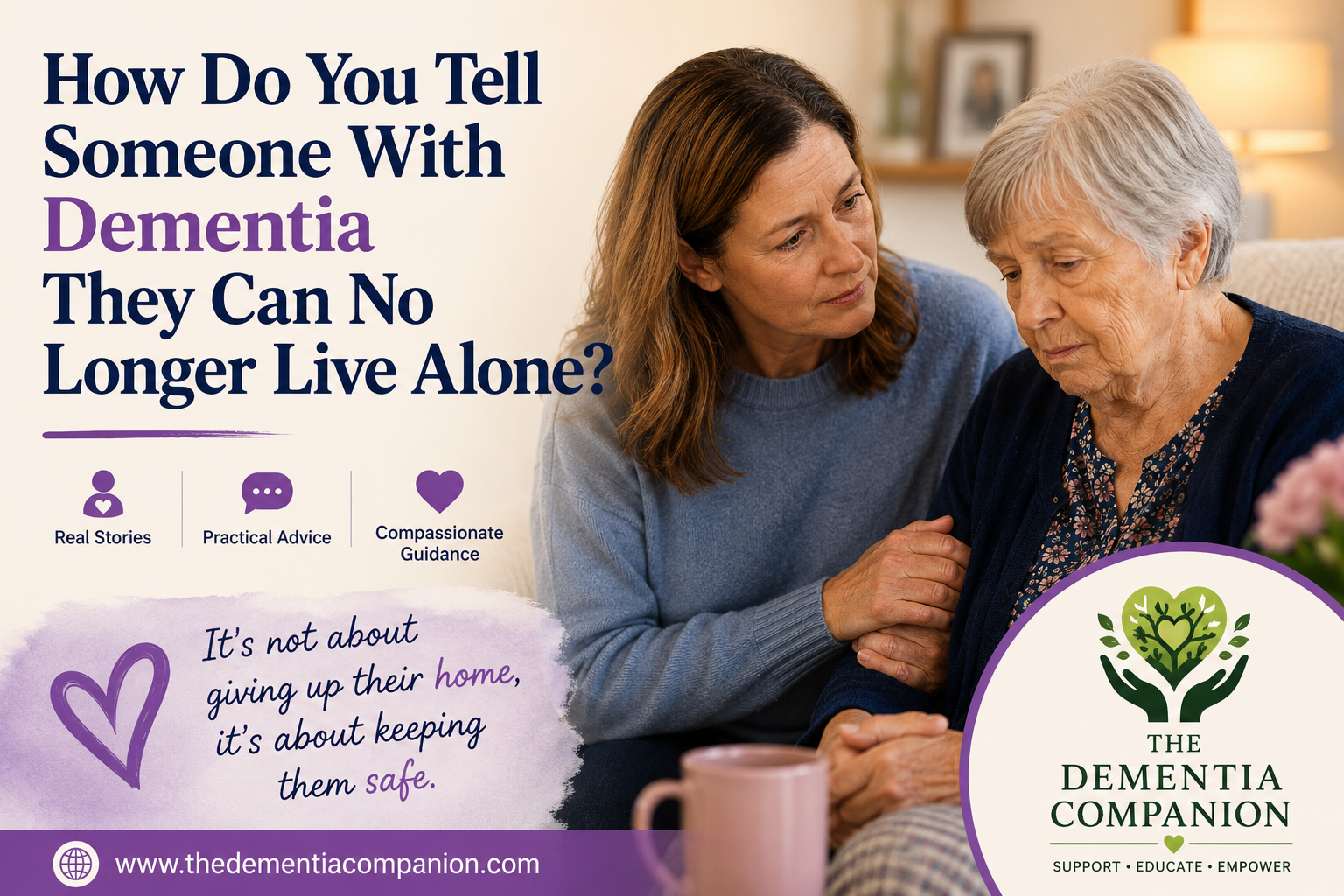
How Do You Tell Someone With Dementia They Can No Longer Live Alone?
One of the most heartbreaking conversations many families face is telling a loved one that it is no longer safe for them to live independently.
It often happens after a crisis. A fall. A hospital admission. A wandering incident. Forgotten medication. A kitchen accident. Something that suddenly makes everyone realise that the risks have become too great.
But even when the evidence seems clear to family members and healthcare professionals, the person living with dementia may not see it the same way.
“I Just Want To Go Home”
This is one of the most common phrases heard in hospitals and care homes.
A person with dementia may have discussed moving previously and may even have agreed that extra support was needed. However, dementia affects memory, insight, reasoning, and the ability to retain new information.
As a result, they may:
* Forget previous conversations.
* Believe they are still managing perfectly well.
* Feel frightened and confused.
* Think family members are making decisions without them.
* Focus entirely on returning to what feels familiar and safe.
What can feel like denial is often the dementia itself.
Real-Life Example: The Falls That Changed Everything
Jean had lived alone for nearly twenty years after her husband died. She was fiercely independent and proud that she still managed her own shopping, cooking, and household tasks.
Over several months, however, things began to change.
Her daughter noticed unpaid bills piling up. Food was expiring in the fridge. Medication was being missed. Then came the falls.
The first fall resulted in a few bruises. The second required a visit from paramedics. The third left Jean on the floor overnight because she couldn’t reach the phone.
Following a hospital admission, professionals assessed her needs and concluded that it was no longer safe for her to return home alone.
When her daughter explained this, Jean became upset.
“But this is my home. I’ve lived there for years.”
The difficult reality was that Jean remembered the home she had lived in safely for decades. She could no longer fully recognise the risks she was now facing every day.
Her daughter stopped trying to convince her and instead focused on reassurance:
“I know you love your home, Mum. We just want to make sure you’re safe and have people around if you need help.”
Several months later, Jean had settled into her care home, was attending activities every day, and had not experienced another serious fall.
Real-Life Example: The Night-Time Wandering
Tom had always been active and enjoyed evening walks around his village.
As his dementia progressed, he began leaving the house during the night believing he needed to go to work.
One winter morning, a neighbour found him several miles away wearing only slippers and a dressing gown.
His family arranged additional support, but the incidents continued.
When the decision was eventually made for residential care, Tom repeatedly told everyone:
“You’re treating me like a child.”
His son later admitted:
“I felt awful. It felt like I was taking away his freedom.”
But after moving into care, Tom had access to secure gardens, companionship, regular meals, and staff available around the clock.
His son later reflected:
“I realised we hadn’t taken away his freedom. We’d given him back his safety.”
Real-Life Example: “I Can Still Manage”
Margaret insisted she was coping perfectly well.
Every time her family visited, she appeared well dressed and cheerful.
However, what they discovered behind the scenes told a different story.
The oven had been left on several times.
Milk was being stored in cupboards.
Medication packets were unopened.
Food was often untouched.
Margaret genuinely believed everything was under control.
When her family suggested moving somewhere with support, she became angry.
“There’s nothing wrong with me.”
The family learned that arguing only created distress.
Instead, they focused on what she would gain.
“You’ll have people around to help with the things you don’t enjoy anymore.”
“You won’t have to worry about cooking or cleaning.”
“You’ll still have your own space.”
Over time, the focus shifted away from what she was losing and towards what she was gaining.
What Usually Doesn’t Help
Many families naturally try to reason with their loved one by explaining:
* The falls.
* The risks.
* Medical assessments.
* Capacity decisions.
* Why professionals are concerned.
Unfortunately, dementia often makes it difficult for someone to process and retain this information.
Repeatedly explaining can sometimes increase distress because the person experiences the bad news as if hearing it for the first time every time.
What Often Works Better
Rather than focusing on convincing them, focus on helping them feel safe.
You might say:
“I know you want to go home.”
“This is a difficult change and I can see it’s upsetting.”
“We’re making sure you’re somewhere safe while you get stronger.”
“I’m going to be with you every step of the way.”
“Let’s go and have a look together.”
Validation of feelings is often far more effective than trying to win an argument with dementia.
The Truth Families Rarely Talk About
One daughter told me:
“I cried all the way home after signing the paperwork.”
Another son said:
“I felt like I was betraying my dad.”
A husband caring for his wife for eight years shared:
“Moving her into care was the hardest thing I’ve ever done, but trying to keep her safe at home had become impossible.”
These feelings are incredibly common.
Guilt often arrives long before acceptance does.
Managing Your Own Feelings
Many relatives describe this as one of the hardest decisions they have ever made.
You may feel as though you are taking something away from someone you love.
But it is important to remember:
This decision is rarely made because a family wants to move someone into care.
It is made because the risks have become too great.
Choosing safety is not failing your loved one.
Choosing support is not giving up.
Sometimes the most loving decision is the one that protects someone when they can no longer protect themselves.
Final Thoughts
If your loved one keeps asking to go home, remember that they are usually expressing a need for comfort, familiarity, security, and reassurance rather than simply asking about a physical building.
Try not to judge success by whether they fully understand or agree.
Instead, focus on helping them feel safe, supported, loved, and connected.
The transition may not be easy, but many families later tell me something surprising.
The person they worried most about often settles far better than expected.
They begin joining activities.
They make friends.
They enjoy having company around them.
And for the first time in months or even years, family members can stop being crisis managers and simply return to being sons, daughters, husbands, wives, and grandchildren again.
Sometimes the greatest gift we can give is not independence at all costs, but safety, dignity, and support when it is needed most.
⸻
Have you had to make the difficult decision to move a loved one into residential care? What helped them settle? Share your experience in the comments and help support another family facing the same journey.
Louise, Founder, The Dementia Companion & The Dementia Assistant.
Website Links:
https://thedementiacompanion.com
https://thedementiaassistant.com