Understanding the 7 Stages of Dementia: Symptoms, Progression and Support
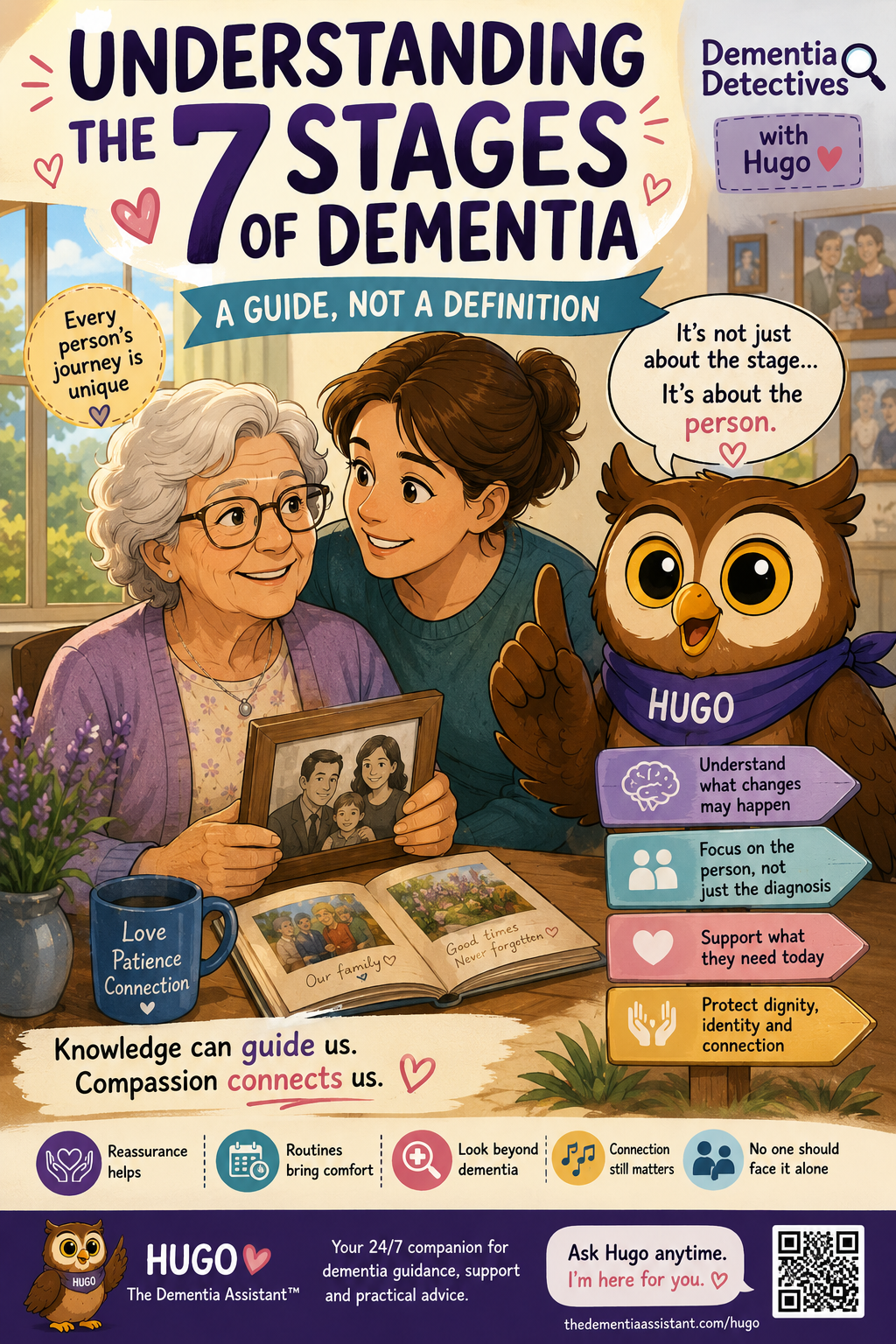
Understanding the 7 Stages of Dementia: Symptoms, Progression and Support
If you are searching for clear information about the 7 stages of dementia, you are not alone. Many families want to understand what changes may happen over time, what support might help, and how to plan ahead without losing sight of the person they love.
The idea of the seven stages of dementia can be useful because it gives a broad picture of how memory, thinking, communication and everyday abilities may change. But it is only a guide. Dementia does not follow an identical path for everyone, and a stage should never matter more than the individual person, their life story, their strengths and what helps them feel safe and valued.
In this article, we will look at the 7 stages of dementia, common symptoms at each stage, and practical ways to support a person living with dementia with dignity and compassion.
What are the 7 stages of dementia?
The 7 stages of dementia usually refer to the Global Deterioration Scale. This model describes a gradual pattern of cognitive decline, from no noticeable impairment through to very advanced dementia.
It is often used to help families and professionals understand dementia progression in a general way. However, not every person will move through each stage in the same order or at the same pace. Different types of dementia can also look different, especially in the earlier stages.
Understanding the stages can still help with:
• recognising changing support needs
• planning ahead
• adapting communication
• reducing distress
• protecting independence for as long as possible
Stage 1 dementia: No noticeable impairment
In stage 1, there are no obvious problems with memory or thinking. The person is functioning as usual in daily life.
Common features:
• no noticeable memory loss
• usual independence
• no clear symptoms affecting daily activities
This stage is included as part of the full scale, although dementia is not usually identified here.
Stage 2 dementia: Very mild cognitive changes
Stage 2 may involve small memory lapses, such as forgetting names, misplacing items or losing track of a word briefly.
Common symptoms:
• occasional forgetfulness
• misplacing everyday objects
• mild word-finding difficulty
These changes do not automatically mean dementia. Ageing, stress, anxiety, depression and poor sleep can all cause similar difficulties. If memory changes are becoming more frequent or affecting daily life, it is sensible to seek a proper medical assessment rather than assume it is dementia.
Stage 3 dementia: Mild cognitive decline
In stage 3, changes become more noticeable to the person and to those around them. Everyday tasks may begin to feel harder, particularly those involving planning, concentration and recent memory.
Common symptoms:
• forgetting recent conversations or appointments
• difficulty organising tasks
• losing important items more often
• becoming less confident in work or social situations
• struggling with concentration
At this stage, the person may still manage independently in many areas, but they may need more support, reassurance or structure.
Helpful support:
• calendars and visual reminders
• simple routines
• reduced pressure and extra time
• gentle encouragement rather than correction
Stage 4 dementia: Moderate cognitive decline
Stage 4 dementia usually brings clearer difficulties with day-to-day life. The person may need help with more complex tasks such as finances, shopping, cooking or managing appointments.
Common symptoms:
• forgetting recent events
• difficulty managing money or paperwork
• trouble planning meals or following steps
• confusion in unfamiliar situations
• increased reliance on others for practical support
This is often the stage where families begin taking on more responsibility. Good support here means balancing safety with independence, so the person remains involved in daily life wherever possible.
Helpful support:
• break tasks into smaller steps
• use familiar routines
• offer simple choices
• support the person to do what they still can
Stage 5 dementia: Moderately severe decline
In stage 5, the person usually needs regular support with everyday living. They may forget important personal information, become confused about time or place, and need help choosing clothing or following their daily routine.
Common symptoms:
• confusion about dates or location
• forgetting personal details
• needing help with dressing appropriately
• increased anxiety in unfamiliar places
• more dependence on family or carers
Although memory and orientation are more affected, emotional awareness is often still strong. Tone of voice, reassurance and familiar surroundings matter greatly.
Helpful support:
• keep routines consistent
• give one-step prompts
• avoid arguing about facts
• focus on reassurance and comfort
Stage 6 dementia: Severe cognitive decline
Stage 6 dementia often means the person needs help with most aspects of daily care. This may include washing, dressing, toileting and eating. Communication may become harder, and the person may seem more distressed, fearful or confused.
Common symptoms:
• needing support with personal care
• confusion about people, place and time
• sleep disturbance
• repetitive questions or phrases
• fear, suspicion or emotional distress
• changes in continence
It is important not to label these changes as simply “behaviour.” Distress is often communication. The person may be expressing fear, pain, confusion, constipation, infection, dehydration or discomfort in the only way they can.
Helpful support:
• approach slowly and calmly
• explain each step before helping
• use familiar carers when possible
• pause if the person becomes distressed
• check for pain, illness or other causes if something changes suddenly
Stage 7 dementia: Very severe decline
Stage 7 is the most advanced stage of dementia in this model. The person may have very limited speech, need full support with all care, and become increasingly physically frail.
Common symptoms:
• very limited verbal communication
• full dependence for personal care
• difficulty walking or no longer walking
• difficulty swallowing
• weight loss and frailty
• increased vulnerability to infection
Even in very advanced dementia, the person may still respond to a gentle voice, familiar music, touch, prayer, scent or the reassuring presence of someone they trust.
Helpful support:
• prioritise comfort and dignity
• watch for signs of pain or illness
• support eating and drinking as safely as possible
• keep the environment calm
• maintain human connection in simple, familiar ways
How quickly do the 7 stages of dementia progress?
There is no fixed timeline for dementia progression. Some people live for many years with gradual change, while others decline more quickly. The speed of progression can vary depending on the type of dementia, the person’s overall health, age, other medical conditions and the support around them.
This is why the seven stages are best understood as a general framework, not a prediction of exactly what will happen or when.
Do all people with dementia go through the same stages?
No. Dementia affects each person differently.
Some people have more memory problems early on. Others may first show changes in language, visual understanding, judgement, movement or behaviour. Some people also fluctuate, having good days and harder days rather than a smooth step-by-step decline.
The stage model can be helpful, but it should never replace careful attention to the person’s usual personality, routines, strengths and needs.
When a change may not be dementia progression
One of the most important things to understand is that not every worsening is caused by dementia itself.
If a person suddenly becomes more confused, sleepy, distressed, weak or less able than usual, it is important to consider other causes first. These can include:
• infection
• delirium, meaning a sudden change in confusion or alertness
• dehydration
• constipation
• pain
• medication side effects
• poor sleep
• mouth or dental pain
• depression or anxiety
• a recent change of environment or routine
A sudden or out-of-character change deserves medical review. Dementia should never stop someone being assessed for treatable physical or emotional problems.
Supporting a person living with dementia at every stage
Although needs change over time, some principles matter at every stage of dementia care:
• see the person, not just the diagnosis
• focus on strengths as well as difficulties
• support independence wherever possible
• offer choice, even in small ways
• use calm, respectful communication
• treat distress as a sign that something may be wrong
• adapt the environment to make life easier
• protect dignity in all personal care
The most helpful question is often not “what stage are they in?” but “what does this person need today?”
Keywords related to the 7 stages of dementia
If you are writing about this topic or looking for related information, useful search terms include:
• 7 stages of dementia
• stages of dementia
• dementia progression
• early signs of dementia
• moderate dementia symptoms
• severe dementia symptoms
• advanced dementia care
• how dementia progresses
• what are the 7 stages of dementia
• dementia symptoms by stage
Final thoughts on the stages of dementia
Learning about the 7 stages of dementia can help families feel more prepared, but it should never reduce a person to a checklist of decline. A person living with dementia is still themselves, with a history, identity, preferences, beliefs and relationships that matter deeply.
The stages can guide understanding. They should not replace compassion, flexibility or curiosity about what the person is experiencing.
When families and professionals combine knowledge of dementia progression with person-centred care, they are better able to respond not just to symptoms, but to the human being living through them.
Louise Donaghy & Hugo
Take care,
Louise Donaghy
Founder, The Dementia Companion & The Dementia Assistant®
Hugo 🦉
Your 24/7 companion for dementia guidance, support, and practical advice.
Because no one should have to face dementia alone.
If you want to chat more, I’m Hugo, and I’m available 24/7 to answer your dementia and Alzheimer’s questions, provide guidance, and support you whenever you need it.
https://thedementiaassistant.com/hugo
• #PersonCentredCare
• #CompassionateCare
• #AgingWell
• #ElderCare
• #SeniorCare
• #HealthEducation
• #CareHome
• #HomeCare
• #StagesOfDementia
• #DementiaStages
• #DementiaProgression
• #DementiaSymptoms
• #AdvancedDementia
• #EarlySignsOfDementia
• #Dementia
• #StagesOfDementia
• #DementiaCare
• #DementiaSupport
• #DementiaAwareness
• #FamilyCaregiver
• #PersonCentredCare