The Importance of Routine in Dementia Care | Reducing Anxiety and Supporting Independence
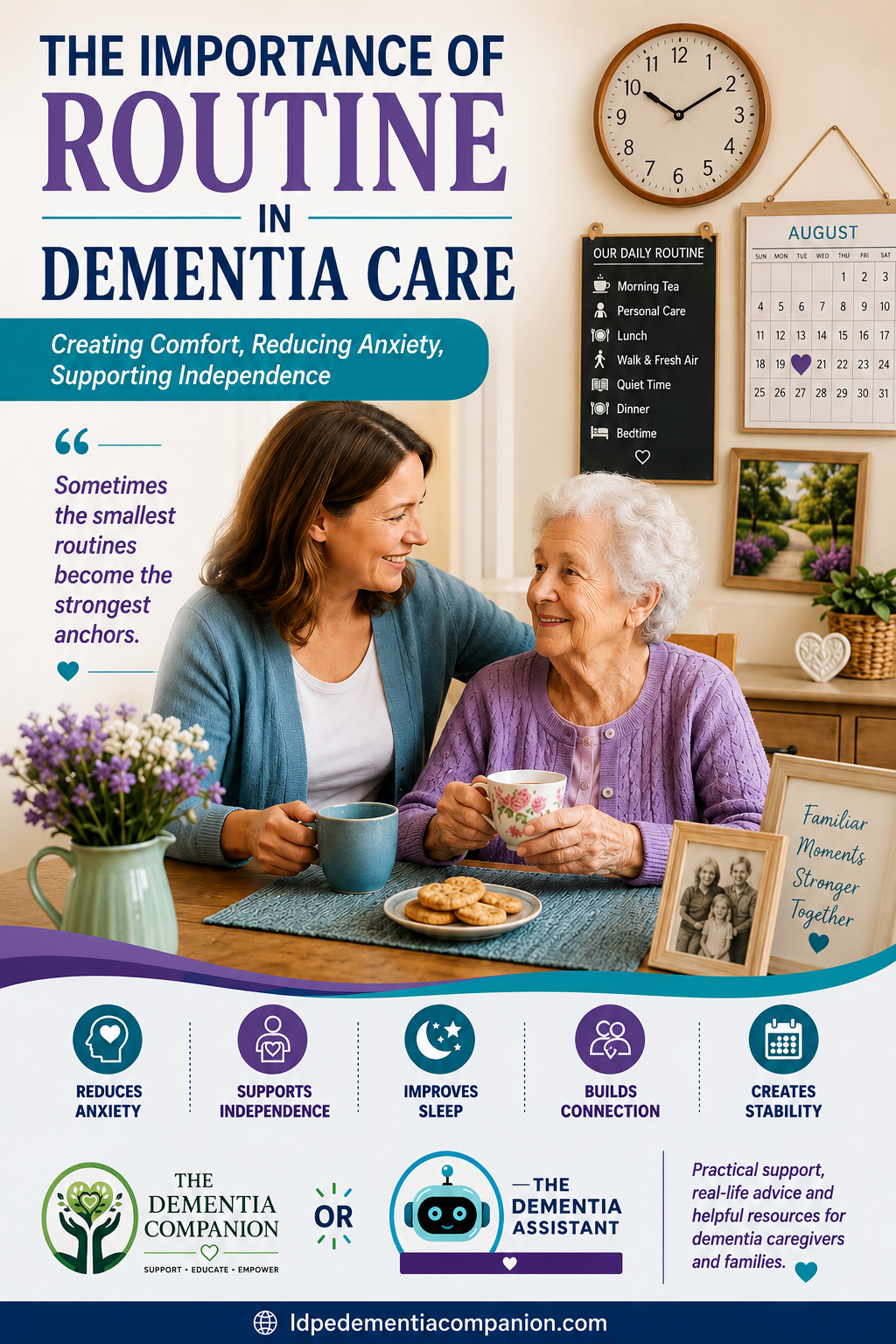
The Importance of Routine in Dementia Care:
Why Consistency Creates Comfort?
One of the most effective tools available to families caring for a loved one with dementia costs nothing, requires no prescription, and can be implemented immediately.
That tool is routine.
While routines help all of us navigate daily life, they become particularly important for people living with dementia. As memory, reasoning, and problem-solving abilities change, familiar daily patterns can provide comfort, reduce confusion, and create a sense of security.
Over the years, I have seen firsthand how something as simple as having breakfast at the same time, taking a regular walk, or listening to favourite music each afternoon can dramatically improve a person’s wellbeing.
Why Dementia Makes Routine So Important
As dementia progresses, the brain can find it increasingly difficult to process new information, adapt to unexpected changes, and make decisions.
Tasks that once seemed simple can suddenly become overwhelming.
Imagine waking up every morning unsure of what day it is, where you are supposed to be, or what is expected of you. For many people living with dementia, this uncertainty can create anxiety and distress.
Routine helps remove some of that uncertainty.
Even when a person can no longer remember events from earlier in the day, they may still recognise familiar patterns and respond positively to them.
The routine itself becomes reassuring.
How Routine Reduces Anxiety
One of the most common symptoms families describe is increased anxiety.
This may appear as:
* Pacing
* Repetitive questioning
* Restlessness
* Irritability
* Following family members around the home
* Increased confusion later in the day
A consistent daily routine provides predictability.
When meals, activities, medication, and bedtime occur at similar times each day, the person often feels calmer because their environment becomes more familiar and easier to understand.
Supporting Independence for Longer
Routine can also help people maintain their independence.
Many individuals with dementia can continue performing daily tasks when those tasks occur in a familiar order.
Examples include:
☕ Tea or coffee after waking
🚿 Washing and dressing after breakfast
💊 Medication with lunch
🚶 Afternoon walk
📺 Favourite television programme in the evening
😴 Bedtime at a consistent hour
When activities are repeated regularly, they become easier to recognise and complete.
A Real-Life Example
I once supported a lady living with dementia who spent much of her day walking around her home, appearing anxious and unable to settle.
Together, we gradually created a predictable daily structure.
Every visit began with a cup of tea.
We would then look through family photographs, spend time chatting, listen to music she enjoyed, and have lunch at approximately the same time every day.
After lunch she would often rest peacefully.
Within a few weeks, her pacing reduced significantly and she appeared noticeably calmer.
The dementia had not changed.
The routine had.
This is something I see repeatedly in dementia care. People may forget what happened earlier in the day, but they often remember the feeling of safety and comfort that routine creates.
Better Sleep Through Consistency
Sleep difficulties are extremely common in dementia.
A regular daily routine can support healthier sleep by:
* Encouraging daytime activity
* Reducing daytime napping
* Providing predictable evening routines
* Lowering anxiety before bedtime
Simple habits such as reducing stimulation before bed, dimming lights, and following the same bedtime routine each evening can make a significant difference.
Routine Helps Caregivers Too
The benefits are not limited to the person living with dementia.
Caregivers often report feeling less stressed when there is a predictable structure to the day.
Routine can help with:
* Medication management
* Meal preparation
* Personal care
* Appointment planning
* Reducing crisis situations
Many families tell me they spend less time firefighting problems and more time enjoying meaningful moments together once a routine is established.
When Routine Needs to Change
Life does not always follow a schedule.
Hospital admissions, medical appointments, respite stays, visitors, or family events may disrupt established routines.
When changes are unavoidable:
* Explain what is happening using simple language.
* Use familiar objects such as photographs or favourite blankets.
* Bring favourite music if away from home.
* Reassure frequently.
* Return to normal routines as quickly as possible.
The goal is not rigidity.
The goal is familiarity.
Final Thoughts
Routine provides something dementia often takes away: predictability.
While it cannot stop the progression of dementia, it can significantly improve quality of life by reducing anxiety, supporting independence, improving sleep, and helping people feel safe.
Sometimes the smallest routines become the most important.
A favourite mug.
A daily walk.
A familiar song.
A regular visitor.
These simple moments become anchors in a world that can otherwise feel increasingly uncertain.
For many people living with dementia, routine is not just helpful.
It is comforting, reassuring, and often essential.
Louise Donaghy
Founder, The Dementia Companion & The Dementia Assistant