Is Dementia Reversible? Understanding Amyloid Build-Up and Alzheimer’s Disease
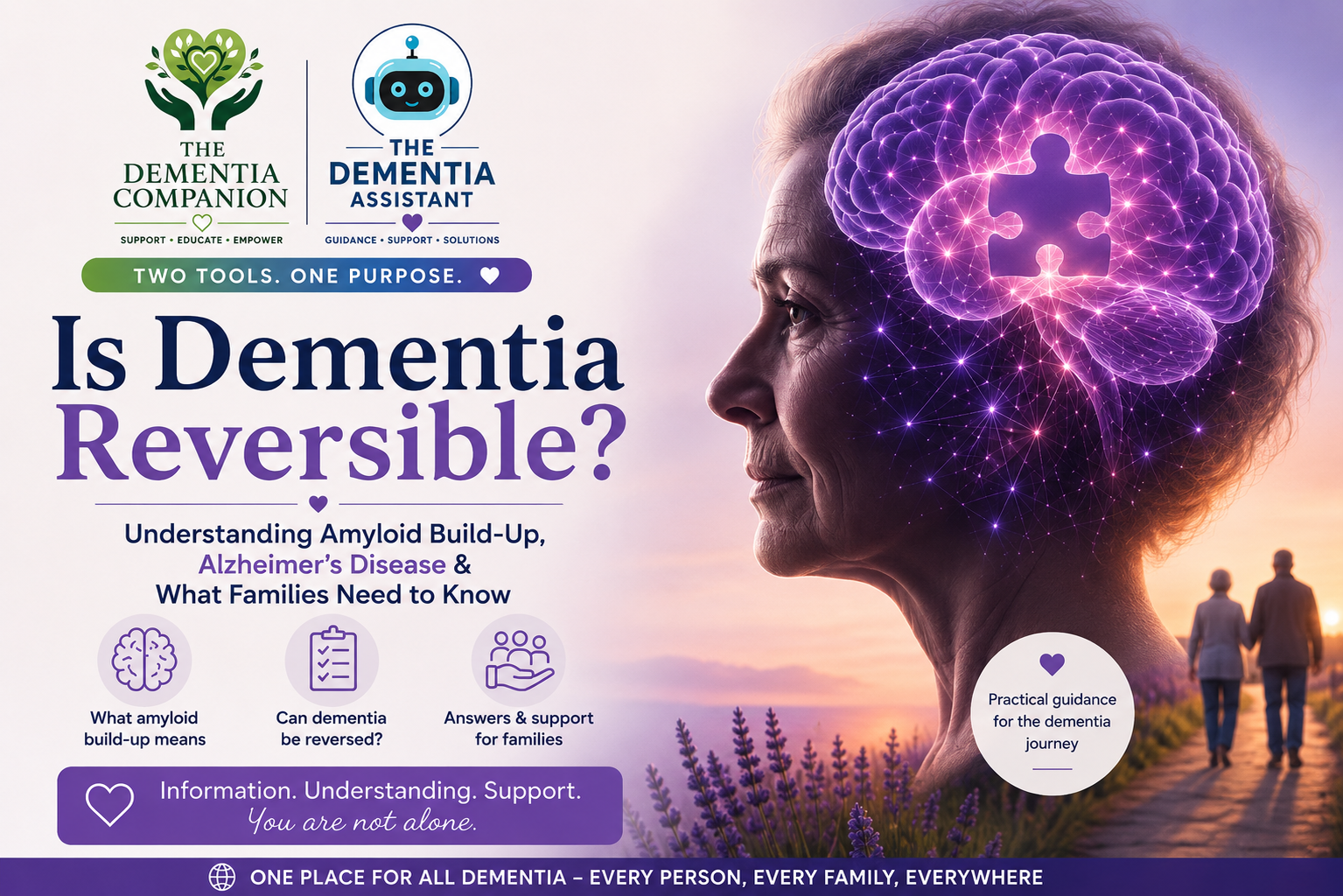
Is Dementia Reversible? Understanding Amyloid, Alzheimer’s Disease, and What Families Need to Know
One of the most common and emotional questions families ask after a dementia assessment is:
“Can dementia be reversed?”
The answer is not always straightforward.
While some conditions can cause dementia-like symptoms that may improve with treatment, others involve permanent changes within the brain. Understanding the difference can help families make informed decisions and prepare for the future.
What Is Dementia?
Dementia is not a single disease.
It is an umbrella term used to describe a collection of symptoms affecting memory, thinking, reasoning, communication, and everyday functioning.
Many different conditions can cause dementia symptoms, including:
* Alzheimer’s disease
* Vascular dementia
* Lewy body dementia
* Frontotemporal dementia
* Mixed dementia
The underlying cause often determines whether symptoms can improve, remain stable, or gradually progress over time.
Are Any Forms of Dementia Reversible?
Some medical conditions can mimic dementia and may improve significantly when treated.
These include:
* Vitamin B12 deficiency
* Thyroid disorders
* Certain infections
* Medication side effects
* Depression
* Sleep disorders
* Severe dehydration
* Delirium
This is one reason doctors often perform blood tests, cognitive assessments, and brain scans before confirming a diagnosis.
If the symptoms are being caused by one of these conditions, treatment may lead to noticeable improvement.
What Does Amyloid Build-Up Mean?
Many families are told that scans have shown amyloid build-up within the brain.
Amyloid is a protein that can accumulate between brain cells, forming what are known as amyloid plaques.
These plaques are one of the key biological changes associated with Alzheimer’s disease.
However, amyloid alone does not automatically mean someone has dementia.
Some people have amyloid present for years before symptoms develop, while others may never develop significant cognitive impairment.
Doctors look at several factors together:
* Symptoms
* Cognitive testing
* Brain imaging
* Functional abilities
* Medical history
before making a diagnosis.
Does Amyloid Mean Alzheimer’s Is Inevitable?
Not necessarily.
Amyloid increases the likelihood that Alzheimer’s disease may be present or developing, but the presence of amyloid alone is not enough to predict exactly what will happen next.
If someone already has memory problems, confusion, or difficulty managing daily tasks and amyloid has been identified, clinicians may conclude that Alzheimer’s disease is the most likely underlying cause.
Every person is different, and progression varies significantly from one individual to another.
Can Alzheimer’s Disease Be Reversed?
Currently, Alzheimer’s disease cannot be reversed.
The damage caused by the disease cannot be fully undone using current treatments.
However, this does not mean there is no hope.
Modern treatments, therapies, lifestyle interventions, and supportive care can often help people maintain independence, function, and quality of life for longer.
Researchers around the world continue to make significant advances in understanding Alzheimer’s disease and developing new treatments.
New Treatments for Alzheimer’s Disease
Recent years have seen the development of medications designed to target amyloid plaques directly.
These treatments aim to reduce amyloid build-up and potentially slow disease progression in some individuals diagnosed during the early stages of Alzheimer’s disease.
While these treatments are not cures and do not reverse existing damage, they represent an important step forward in dementia care and research.
Questions Families May Wish to Ask
If your loved one has been told they have amyloid build-up, consider asking:
* Has Alzheimer’s disease been formally diagnosed?
* Is this Mild Cognitive Impairment (MCI) or dementia?
* What stage of the condition do you believe they are in?
* What treatment options are available?
* Would they be suitable for any newer therapies?
* What support services are available locally?
Having clarity about the diagnosis can make future planning much easier.
Looking Beyond the Diagnosis
A diagnosis of Alzheimer’s disease can feel overwhelming.
Families often experience fear, grief, uncertainty, and a sense of loss.
Yet many people continue to enjoy meaningful relationships, activities, routines, and moments of joy for years after diagnosis.
The focus gradually shifts from trying to cure the condition to supporting the person living with dementia, preserving independence where possible, and ensuring both the individual and their family receive the support they need.
Knowledge empowers families.
Understanding what is happening allows us to replace fear with preparation, confusion with understanding, and isolation with support.
You are not alone on this journey.
⸻
Further Support
🌐 The Dementia Companion
Practical guidance, education, resources, and support for families living with dementia.
🌐 The Dementia Assistant
Your 24/7 dementia support companion with practical solutions, family guidance, crisis support, wellbeing resources, and care tools.
One Place for All Dementia.