Hallucinations, Delusions & Dementia: Every Voice Matters
Hallucinations, Delusions and Dementia: Looking Beyond the Medication
“Help! Nothing seems to be working.”
“I live in Atlanta, My mother has severe Alzheimer’s disease with possible mixed Lewy body dementia. Every day she experiences hallucinations, delusions and paranoia. We’ve tried different medications, but instead of helping, they leave her sleepy, weak or even passing out while eating. There has to be a better way…”
This story echoes in thousands of homes, filled with quiet desperation.
Families often feel torn—wanting to ease distress while fearing the treatment may cause harm, with no clear path forward. Dementia care is rarely simple or linear. Sometimes the answer isn’t changing medication, but understanding the condition—and the human experience behind it.
Seeing Through Different Lenses
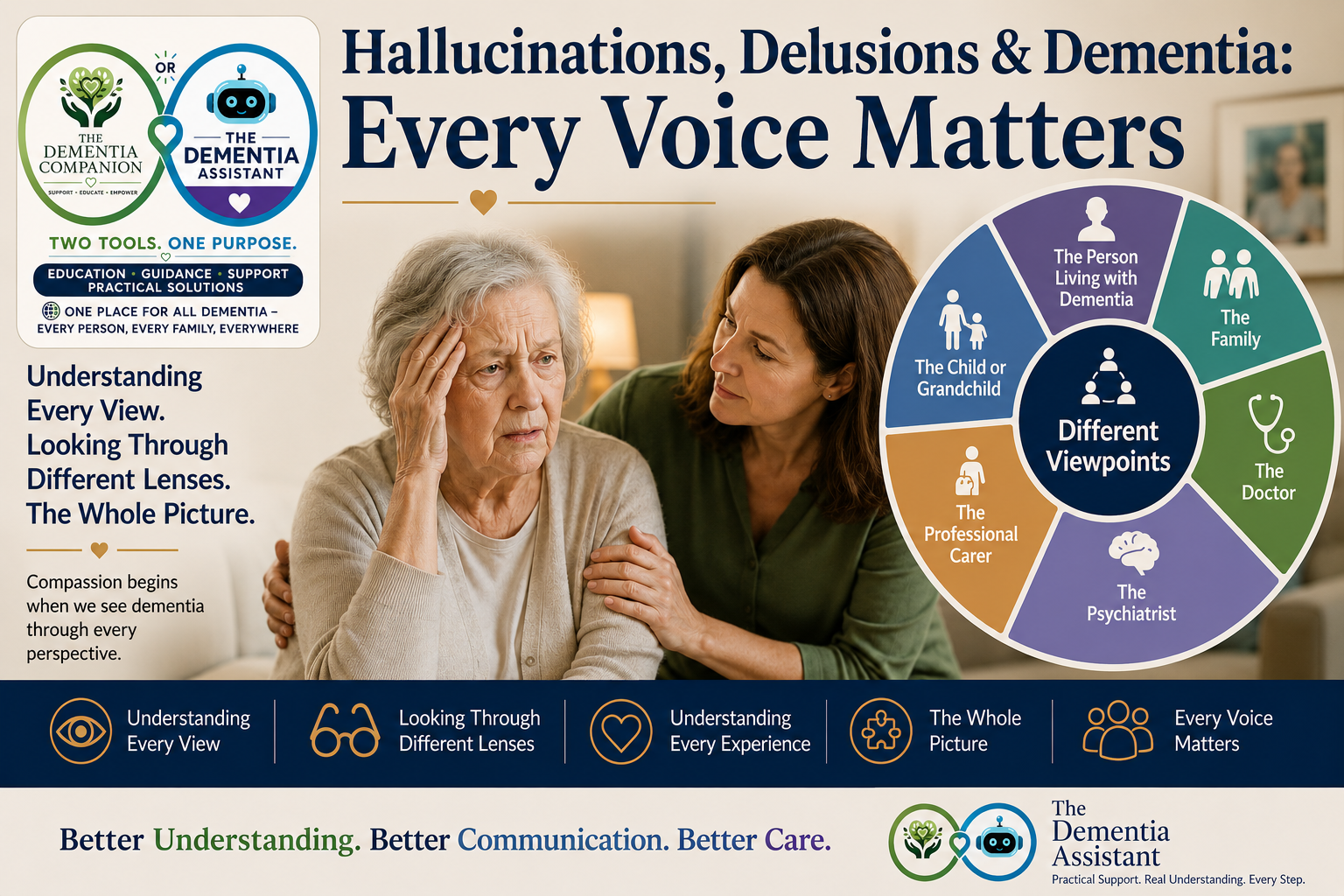
To truly understand hallucinations and delusions in dementia, it helps to consider the experience from multiple perspectives.
The Person Living with Dementia
Imagine seeing strangers in your living room, believing your purse has been stolen, or thinking your spouse has been replaced. To others, these experiences seem impossible. To the person living with dementia, they are vivid, real, and often deeply frightening.
In these moments, arguing or correcting rarely brings comfort. Instead, it can increase distress. What often helps more is validation, reassurance, and gentle redirection—approaches that prioritize emotional safety over factual accuracy.
The Family Experience
Families frequently ask why these symptoms can’t simply be stopped. The reality is that medications do not always eliminate hallucinations or delusions, and the answers are rarely straightforward.
Loved ones often find themselves caught in an emotional dilemma: watching someone they care about feel frightened, while also seeing medications cause excessive sleepiness, weakness, or increased risk of falls. Each decision can feel like a trade-off, and guilt often follows no matter what choice is made.
The goal becomes finding a balance—improving quality of life while minimizing harm, even when that balance is difficult to achieve.
The Medical Perspective
For clinicians, treating hallucinations and delusions in dementia involves complex decision-making. Some medications may reduce symptoms, but they can also introduce significant side effects such as sedation, confusion, low blood pressure, movement problems, and increased fall risk.
This challenge is even greater in cases of suspected Lewy body dementia, where individuals are often more sensitive to medications. Treatments that may be tolerated in Alzheimer’s disease can sometimes worsen symptoms or cause severe reactions in these patients.
Because of this complexity, specialist input from a geriatric psychiatrist or neurologist can be essential in guiding safe and effective care.
Looking Beyond Dementia Itself
It’s important to recognize that hallucinations and delusions are not always caused solely by dementia. Often, they are worsened—or even triggered—by other underlying factors.
Common contributors include infections such as urinary tract infections, untreated pain, constipation, dehydration, poor sleep, medication side effects, changes in routine, hospital stays, and sensory impairments like vision or hearing loss. Even overstimulation in the environment can play a role.
Addressing these triggers can sometimes significantly reduce symptoms without the need to adjust dementia medications
The Role of the Caregiver
Caregivers often become keen observers, noticing patterns that may not be immediately obvious during clinical visits. Keeping a simple diary of when symptoms occur, what happened beforehand, and how the person was feeling can provide valuable insights.
Over time, these observations can reveal connections—such as symptoms worsening when the person is tired, hungry, or overwhelmed. This kind of information can be incredibly helpful in shaping care strategies and gives caregivers a greater sense of control in an otherwise unpredictable situation.
Finding Hope in the Process
While hallucinations and delusions may not disappear entirely, they can often be managed more effectively with the right approach. Progress may come from working with the right specialist, carefully reviewing medications, identifying and addressing triggers, and using calm, supportive communication.
Establishing familiar routines and ensuring that caregivers themselves receive support are equally important. Sometimes, the most meaningful change doesn’t come from a new prescription, but from a deeper understanding of what the person with dementia is experiencing.
When families shift from trying to correct the experience to responding with compassion, fear often gives way to connection.
How The Dementia Assistant Can Help
At The Dementia Assistant, we believe families need more than information—they need understanding and practical support.
Our platform provides guidance on managing hallucinations and delusions, communication strategies for families, crisis support tools, behavior tracking resources, and comprehensive care planning. We also offer dementia education, professional resources, and specialized guidance for children and grandchildren through the Dementia Detective Academy.
Knowledge doesn’t remove dementia, but it can reduce fear. It replaces uncertainty with clarity and confidence, helping families respond with compassion and dignity.
If you’re feeling overwhelmed or unsure what to do next, you don’t have to navigate this alone. Visit our website to explore practical tools, expert guidance, and support designed specifically for families like yours. Take the next step toward clarity, confidence, and compassionate care today.
The Dementia Assistant
https://thedementiaassistant.com