Dementia and Heatwaves: The Day That Broke My Heart How one ordinary summer’s day reminded me why dementia and extreme heat can become a life-threatening combination. By Louise Donaghy Founder – The Dementia Companion & The Dementia Assistant
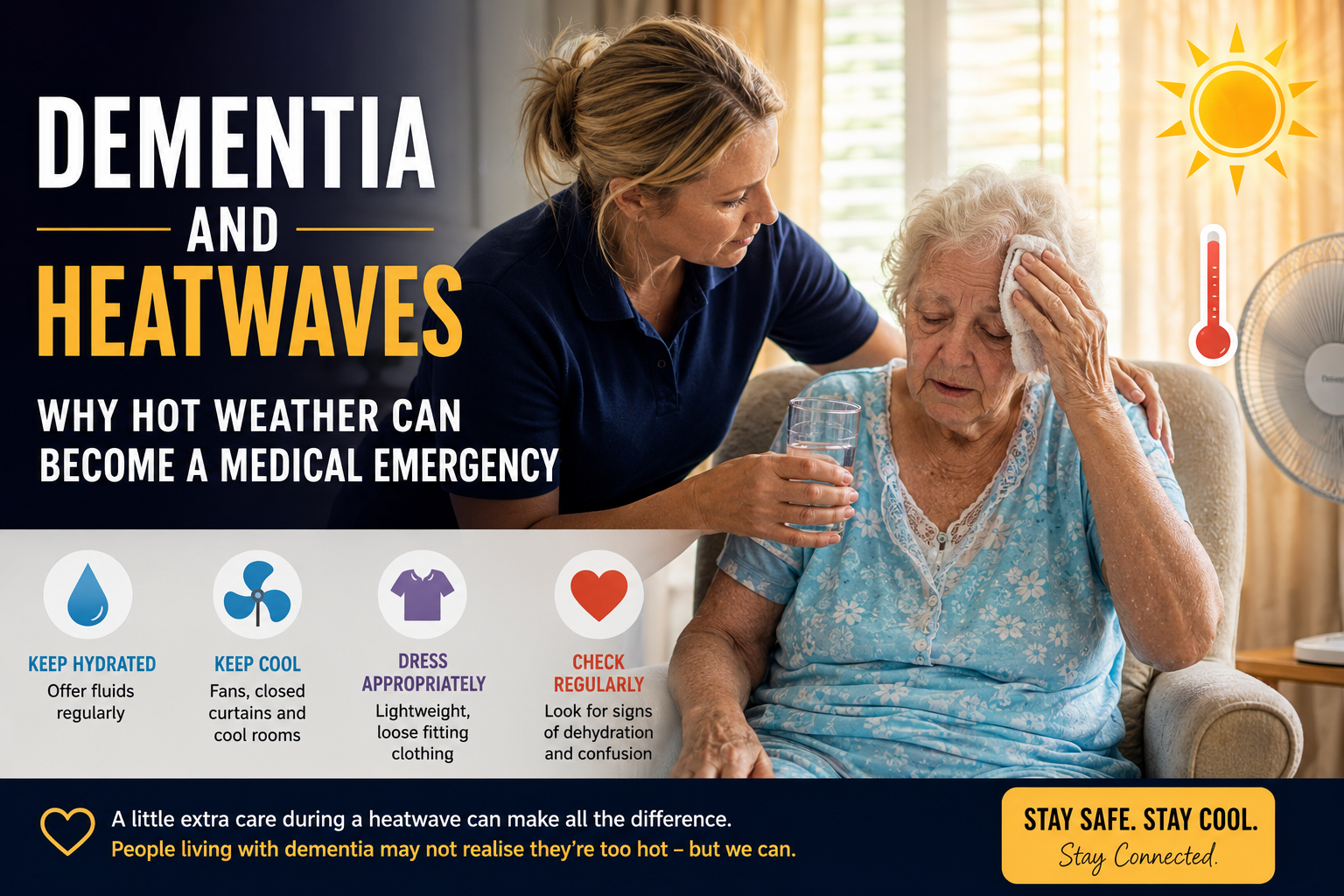
Dementia and Heatwaves: Why Hot Weather Can Become a Medical Emergency
There are days in care that stay with you forever.
Today was one of those days.
This morning, something didn’t feel right. I wasn’t due to see one of my beautiful clients until later, but I had a bad feeling and decided to arrive early.
Thank goodness I did.
For years—long before dementia—she had followed exactly the same morning routine. She would wake up, put on her dressing gown, go downstairs, make herself a cup of tea, carry it back upstairs and enjoy it in bed. It was a routine she knew without thinking.
Before dementia, she also knew instinctively to open windows when needed, close curtains during hot weather, switch on a fan and dress appropriately for the temperature.
Those simple decisions that most of us make automatically had disappeared.
When I arrived, I found her sitting upstairs, absolutely drenched in sweat. She was shaking, dehydrated, confused and struggling to think clearly.
It broke my heart.
I immediately gave her a large glass of cold water, soaked a flannel in cold water and gently cooled her down. I closed every curtain, switched on the fan and stayed beside her while she slowly drank.
Little by little, she began to improve.
Once she felt able, I helped her wash and change into cooler clothing. Normally she would never allow me to do this. Even at 93 years old, she is fiercely independent. Dementia hasn’t taken away that independence—it has simply trapped her in a repeating loop where she believes she can still manage everything exactly as she always has.
We went downstairs together. By then the room had cooled slightly, and after some more cold drinks and an ice lolly, she started talking again in her familiar repetitive conversations.
For me, that repetition was reassuring.
It told me she was coming back to herself.
I left her comfortable, with the fan running, curtains closed, plenty of drinks nearby and everything she needed. I explained that I would return in a couple of hours after checking on my other clients.
When I came back, my heart sank.
The fan had been switched off.
Every curtain was wide open.
The heating had been turned up.
She had put on a cardigan because she believed she was cold.
The house was unbearably hot.
Within just a couple of hours, everything we had done together had been undone.
We quickly cooled her down again, changed her into lighter clothes and I took her to a local independent living centre where we could sit safely in air conditioning while her family returned to the house to cool it down properly.
After lunch and a couple of hours in a cool environment, she looked so much better. She was smiling, chatting and enjoying herself.
But the story didn’t end there.
Later that afternoon, after finishing with my other clients, I checked on her once more.
Again, the curtains were open.
Again, the fan had been switched off.
Again, the house was boiling.
Again, she had put on warm clothing.
The cycle had simply repeated itself.
And that’s what dementia does.
It isn’t stubbornness.
It isn’t laziness.
It isn’t forgetfulness in the way many people imagine.
Her brain could no longer recognise danger. She couldn’t remember why the curtains had been closed or why the fan had been switched on. She genuinely believed she needed the heating and a cardigan, despite the extreme temperatures.
It made me ask myself a heartbreaking question:
How do we keep someone safe when their own brain keeps undoing the things that protect them?
Unless someone is there around the clock, this can happen again and again throughout the day.
Today’s experience reinforced something I have always known but had never seen so clearly.
Dementia and heat do not mix.
During hot weather, people living with dementia are at much greater risk because they may:
* Forget to drink.
* Forget they are too hot.
* Turn heating on instead of off.
* Close windows when they should open them—or open them when they should stay closed.
* Put on extra clothing.
* Switch fans off.
* Become dehydrated very quickly.
* Experience increased confusion, hallucinations or agitation.
These aren’t poor decisions.
They are symptoms of a damaged brain trying to make sense of the world.
As carers, families and neighbours, we have to become that person’s memory, judgement and safety net.
Today could have ended very differently.
Thankfully, it didn’t.
But it reminded me why checking on vulnerable people during a heatwave is so important.
Sometimes, arriving just a little earlier can save a life.
So today, I have one simple request.
Please check on the older people in your life.
Check on your parents.
Check on your neighbours.
Check on your friends.
And if they are living with dementia, don’t assume that because they looked comfortable an hour ago, they are still safe now.
Heat can become dangerous incredibly quickly.
A glass of water.
A closed curtain.
A fan.
A cool room.
These small acts of kindness can make all the difference.
Because today reminded me that dementia doesn’t take a day off simply because the sun is shining.
And neither should our compassion.
⸻
Important Safety Update: Dementia, Heat Exhaustion and Heatstroke
What happened today shows exactly why dementia and heatwaves can become so dangerous.
People living with dementia may not recognise that they are too hot, thirsty, dehydrated or becoming unwell. They may turn fans off, open curtains, put heating on, wear extra clothing or undo safety measures again and again — not because they are being difficult, but because their brain can no longer judge the danger.
Heat Exhaustion Signs to Look Out For
Watch for:
* Heavy sweating
* Pale, clammy skin
* Dizziness or faintness
* Tiredness or weakness
* Headache
* Muscle cramps
* Feeling sick or vomiting
* Fast breathing or fast heartbeat
* Worsening confusion
* Shaking or unsteadiness
* Reduced urine or dark urine
Heatstroke Red Flags — Call 999
Call 999 immediately if the person:
* Is still unwell after 30 minutes of cooling
* Has a temperature around 40°C or above
* Is very confused, drowsy or difficult to wake
* Has hot, dry skin and is not sweating
* Collapses or faints
* Has a seizure
* Has breathing difficulties
* Becomes unconscious
Heatstroke is a medical emergency.
Step-by-Step: What To Do If You Find Someone With Dementia Overheated
1. Move them to the coolest place immediately.
Use a shaded room, downstairs room, air-conditioned building, car with air conditioning, or a safe community space.
2. Call for help if they look seriously unwell.
If they are very confused, faint, extremely hot, drowsy, not improving, or you are worried — call 999.
3. Remove extra layers.
Take off cardigans, thick dressing gowns, socks, blankets or anything trapping heat.
4. Start cooling them down.
Use cool flannels on the face, neck, wrists and underarms. Spray or sponge with cool water. Use a fan if safe.
5. Offer small sips of cool fluid if they are awake and able to swallow safely.
Do not force drinks if they are drowsy, choking, vomiting or not fully alert.
6. Close sun-facing curtains and blinds.
Keep windows closed during the hottest part of the day if the air outside is hotter than inside. Open windows later when the air cools.
7. Turn off heating and unnecessary appliances.
Check radiators, thermostats, electric fires, heated blankets and kitchen appliances.
8. Stay with them while they recover.
Do not assume they will remember to keep drinking, keep the fan on or leave the curtains closed.
9. Re-check regularly.
With dementia, the person may undo everything within minutes or hours. One safety check may not be enough.
10. Update family or the care team.
Explain exactly what happened, what actions were taken, and that the person may need increased visits or supervision during extreme heat.
In This Exact Scenario
If someone repeatedly turns the fan off, opens curtains, puts heating on and wears warm clothing during a heatwave, the care plan needs an urgent heatwave safety plan.
This may include:
* Extra welfare checks during hot days
* Family phone reminders
* Timed hydration prompts
* Drinks placed in visible areas
* Fans positioned safely
* Thermostat controls reviewed
* Heating switched off at the mains if appropriate and agreed
* Cool clothing laid out
* Curtains/blinds managed by carers or family
* Consideration of whether living alone is still safe during extreme weather
This is the frightening truth:
If a person cannot understand heat risk, cannot remember safety advice, and repeatedly reverses cooling measures, they may not be safe alone during a heatwave.
That does not mean removing independence lightly.
It means recognising that heat can turn a normal day into a medical emergency very quickly.
Dementia and heat do not mix.
During a heatwave, we must become the person’s memory, judgement and protection — because they may not realise they are in danger until it is too late.
Louise Donaghy
Founder – The Dementia Companion & The Dementia Assistant
https://thedementiacompanion.com
https://thedementiaassistant.com